Category Archives: Noise

Environmental Noise Monitoring for Commercial Plant Operations in London
Environmental Noise Monitoring for Commercial Plant Operations in London

Project Overview and Location

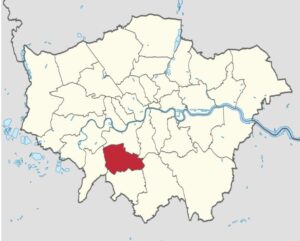
Southwest Environmental Limited was recently commissioned to undertake an environmental noise monitoring project at a residential boundary in London, Greater London. The location falls under the planning jurisdiction of the London Borough of Merton. The primary objective of this instruction was to record and quantify noise levels associated with large-scale plant equipment situated at a major tennis club in the area. Specifically, the noise sources under investigation included a chiller plant, a centralized building, and broadcast facilities. The monitoring was initiated following reports that operational noise persisted continuously throughout the daytime and nighttime periods.

Acoustic Monitoring Methodology

To acquire accurate and representative acoustic data, Southwest Environmental Limited deployed a Svantek SV 307A monitoring station. The sound level meter was installed securely at the residential receptor site and was programmed to log data continuously over a designated five-day period. The scope of the monitoring recorded hourly intervals to establish a precise timeline of the ambient and operational noise climate.

The acoustic parameters measured were A-weighted to adjust the measurements to match human perceived noise levels. The primary metrics utilized in this assessment were:

  • LAeq: The A-weighted, equivalent continuous sound level, which calculates the average noise energy over a specific time period.
  • LA(90): The A-weighted sound level that is exceeded for 90% of the measurement duration. This parameter is the standard metric used to establish the underlying background sound level at a receptor.

Regulatory Standards and Assessment Criteria

The collection of LAeq and LA(90) data is fundamentally required for the assessment of commercial and industrial noise sources. The methodology applied during data acquisition aligns with the requirements of BS 4142: Method for Rating and Assessing Industrial and Commercial Sound. This standard dictates how background sound should be measured and compared against the specific sound level of the commercial operation to determine the likelihood of adverse impacts.

Our data processing categorized the continuous logging into specific reference periods, calculating the average sound levels for the daytime (08:00 – 17:00), evening (18:00 – 23:00), and nighttime (00:00 – 07:00) hours. This temporal breakdown is essential for conducting a robust BS 4142 assessment, as the sensitivity of residential receptors varies significantly between day and night. For more information on how we conduct these surveys, please visit the environmental services section on the Southwest Environmental Limited website.

Project Delivery

Environmental sound assessments often require prompt action to capture representative data during specific operational periods. For this project, Southwest Environmental Limited executed a rapid turnaround. We prioritized a short lead time for site mobilization, equipment installation, and the subsequent compilation of the acoustic data into a structured summary report.

Please contact us if you would like a fixed price quotation.

“Default Yes” Housebuilding Near Train Stations

Unlocking Potential: Navigating “Default Yes” for Housing Near Stations

The UK government’s recent move toward a “Default Yes” approach for housebuilding near well-connected train stations marks a significant shift in planning policy. By streamlining the National Planning Policy Framework (NPPF), the aim is to accelerate the delivery of high-density, sustainable homes where they are needed most. However, building in such close proximity to active rail lines brings unique technical challenges that require expert navigation.

Managing Noise and Vibration

Developing sites adjacent to railway infrastructure necessitates rigorous environmental assessments. At the planning stage, a Noise Assessment is vital. We refer to ProPG: Planning & Noise, which provides a framework for managing noise in new residential developments. This is often coupled with internal sound insulation designs to meet BS 8233:2014 standards, ensuring residents enjoy a high-quality living environment despite the external hum of the network.

Equally critical is the Vibration Assessment. Railway traffic can cause ground-borne tremors that impact human comfort. We assess these risks in accordance with BS 6472-1:2008, which evaluates the “Vibration Dose Value” (VDV). Understanding these levels early allows for the integration of structural mitigation, such as anti-vibration mountings or specific foundation designs, preventing future complaints and ensuring structural integrity.

The Shift to Car-Free Development

Proximity to transport hubs is the primary driver for “car-free” or “permit-free” developments.

While these schemes reduce carbon footprints and maximise land use, local authorities often require proof that overspill parking won’t saturate neighbouring streets.

To support these applications, we conduct comprehensive Parking Surveys, typically following the “Lambeth Methodology“. These surveys involve “beat” counts during peak residential demand (usually between 00:30 and 05:30) to measure “parking stress” within a 200m walking distance of the site. Demonstrating that the local network can absorb any residual demand is often the final hurdle in securing planning permission.

Proven Expertise

With 15 years of experience in delivering noise and transport reports for complex, high-noise environments, we understand the nuances of railway-side development.

We have supported numerous medium-to-major projects, similar to the below:

  • Twickenham Station Redevelopment: A major mixed-use scheme integrating over 100 homes directly above and adjacent to a busy terminal.
  • Walthamstow Central: High-density residential blocks that leverage exceptional PTAL (Public Transport Accessibility Level) ratings.

Our team provides the technical evidence needed to satisfy both environmental health and highways officers. Given the fast-paced nature of “Default Yes” sites, we offer a short turnaround on all technical reporting to keep your project moving.

Case Studies

Noise Assessment 

Parking Survey 

Approximate Cost

For Noise, Vibration and Parking Surveys you can expect to pay.

Noise Assessment – Camden – London

Southwest Environmental Limited  have been asked to prepare a Noise Assessment for a site on Camden High Street.  

Camden High Street is a short stretch of road (less than 500m long, forming part of the A400) in Camden Town, in north-northwest London.

KOKO, the former Camden Palace is in close proximity to the site and as such has been considered as a source of noise in the assessment. That being said planning conditions relating to the refitting and extension of KOKO see very strict noise control limits that should ensure minimal impact if properly enforced.

The report was assembled using secondary data from numerous baseline surveys that had been under taken in the area.

We then derived an appropriate background noise level, and compared this to British Standard noise level criteria, in accordance with BS 4142:214, the prevailing background sound level is not necessarily taken to  be the lowest recorded values, but rather the level that best represents the typical background  sound level during a defined period.

If you have any noise related planning issues, then please call the office for a no obligation discussion.

Noise & Vibration Monitoring – Horsham, West Sussex

Southwest Environmental Limited were recently commissioned undertake long term noise and vibration monitoring for a site in Horsham.

The site in question was a residential usage, with demolition and construction activities occurring immediately adjacent.

Concerns were raised by residents and site management with regards to the levels of noise and vibration experienced by residents.

SWEL acted rapidly to implement a monitoring program on behalf of the client, with an aim to reassure residents.

It was found that noise and vibration levels were for the most part below thresholds as described in the relevant British Standards, although there were some short term exceedances.

The situation has now been described to the residents and its is clear they have been reassured as the number of complaints has dropped significantly.

If you have any requirement for Noise and Vibration Monitoring please ring for a no obligation no charge discussion, and we will duly provide a fixed price quotation.

Noise Impact Assessment – Grays

Noise Impact Assessment – Grays

Acting upon instructions from client, Southwest Environmental have Produced a noise impact assessment according to British  Standards.
 

The noise assessment was carried out for a self storage warehouse project in the greys area the main impact considered within the report with traffic movements. Unlike typical warehousing we cannot expect large volumes of heavy goods vehicle traffic and research in noise levels were based around car movements rather than heavy goods vehicle movements another consideration was that of the 24 hour access required for self storage warehouses SWEL used data from various self storage associations to build a profile or anticipated vehicle movements the site is within an industrial area that there are residential units quite close to the eastern boundary of the site.

It was found that noise levels were as acceptable when assessed in line with the relevant British standards monastery was carried out over 24 hour period prior to the calculations being performed.

Noise Impact Assessment London