 Southwest
Environmental LimitedSouthwest
Environmental Limited
Southwest
Environmental LimitedSouthwest
Environmental Limited| London |
| 02076 920 670 |
| Exeter |
| 01392 927 961 |
| Manchester |
| 01612 970 026 |
| Bristol |
| 01173 270 092 |
SWEL carried out our first life cycle assessment for foam products around 4 years ago, and we have been considering cradle to grave impacts of products for over 10 years. We are also very used to analyzing toxicology data, and we have been assessing indoor air quality for as long as it has been a topic.
The EU Ecolabel for bed mattresses covers everything from traditional spring mattresses to modern latex and polyurethane foams. The goal of the background report is threefold: use sustainable materials, limit indoor air pollution, and ensure the mattress doesn't end up in a landfill prematurely.
Here is the 5-step process to move from manufacture to the "EU Flower" certification.
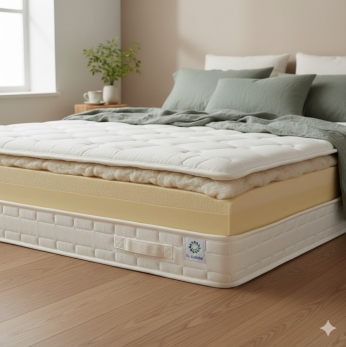
Unlike cleaners, mattresses are "multi-component" products. The criteria apply to any material making up more than 5% of the total weight. You must audit:
Latex & PUR Foams: These face the strictest tests for "Restricted Substances" (like chlorophenols and heavy metals) and Volatile Organic Compound (VOC) emissions.
Springs and Wire: Must be made from high-quality steel, often with restrictions on the types of coatings or galvanization used to prevent toxic runoff.
Textiles: Any fabric cover or internal fiber must meet standards similar to the EU Ecolabel for Textiles, focusing on pesticide residues in natural fibers (like cotton) and dye safety.
Because mattresses are used in enclosed bedrooms, the Background Report places a massive emphasis on Emissions Testing.
The Process: Your finished product (or representative samples of the foam) must be placed in an environmental chamber.
The Goal: You must prove that the "off-gassing" of formaldehyde and other VOCs stays below very strict milligrams-per-cubic-meter limits. This is often the "make or break" step for many manufacturers.
The EU Background Report for mattresses is particularly aggressive toward chemicals that humans might inhale or absorb through skin contact:
Flame Retardants: Many halogenated organic flame retardants are strictly prohibited. The report encourages "Physical Fire Barriers" over chemical sprays.
Biocides: You cannot add "antibacterial" or "anti-odor" coatings unless they are specifically approved and proven safe for prolonged skin contact.
Glues/Adhesives: Solvent-based glues are generally out; water-based or hot-melt adhesives are the standard for Ecolabel compliance.
An eco-friendly mattress that sags after two years isn't sustainable. To pass, the mattress must undergo Mechanical Testing:
The Roller Test: A heavy drum is rolled over the mattress thousands of times to simulate years of use.
Loss of Height/Firmness: After testing, the mattress must retain its shape within a tiny margin (usually less than 15% loss of height).
Warranty: You are required to provide a minimum 10-year warranty (except for cot mattresses), proving your commitment to a long product life.
The "Circular Economy" is a major theme in the latest reports. You must demonstrate that the mattress is designed to be taken apart at the end of its life.
Can the textile cover be easily removed?
Can the springs be separated from the foam for metal recycling?
The user manual must provide clear instructions for consumers on how to dispose of or recycle the mattress responsibly.
We can offer a full fixed price services, or just help out with a few hours work here and there. Contact us for help (hit the big yellow button at the top of page)
The below section was written by a machine.
Achieving the EU Ecolabel for bed mattresses provides a clear, credible signal to consumers that your products meet the highest environmental and health standards. The certification covers various types of mattresses, including those made of latex foam, polyurethane foam, and spring mattresses with various padding materials.
Our consultancy assists manufacturers in interpreting the specific criteria established by the European Commission, ensuring that every component—from the mattress core to the ticking—complies with strict ecological requirements.
The EU Ecolabel is a passport to the European green market. Once certified, your product is recognized in all EU member states, facilitating trade and consumer trust across the following nations:
To qualify for the "Flower" mark, mattresses must undergo rigorous testing and documentation review. We manage this process for you, focusing on:
For manufacturers seeking a holistic approach to corporate responsibility, we recommend pairing product certification with our Zero Cost ESG Consultation. This helps align your product-level achievements with broader sustainability reports.
If your manufacturing facility requires technical drainage improvements to manage production effluent, our experts can provide a SuDS Strategy to ensure site compliance. Additionally, for firms monitoring their global impact, our Whole Life Carbon Assessment (WLCA) services provide deeper insight into your carbon footprint.
With a 15-year track record and professional accreditation (IES/IAQM), Southwest Environmental Limited provides the technical authority required to secure your EU Ecolabel certification and drive your environmental performance forward.