 Southwest
Environmental LimitedSouthwest
Environmental Limited
Southwest
Environmental LimitedSouthwest
Environmental Limited| London |
| 02076 920 670 |
| Exeter |
| 01392 927 961 |
| Manchester |
| 01612 970 026 |
| Bristol |
| 01173 270 092 |
Here at SWEL we have been streamlining composting processes and quality control since 2009. Over that time we have seen plastics become more and more of a problem. But we still like to see the wonderful dark brown mature compost at the end of the process line, we still think its kind of magic.
In the UK, many composters work to PAS100. And as such you will already meet many of the below criteria.
The EU Ecolabel for soil products ensures that the "black gold" used in gardens and agriculture is safe, sustainable, and high-performing. Whether you produce potting soil, bark mulch, or soil conditioners, the process follows these five critical steps.
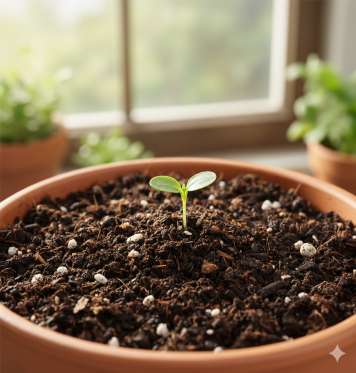
The most significant requirement in the current Background Report is the restriction on peat.
The Rule: Growing media (potting soil) cannot contain more than a specific percentage of peat, and in many new revisions, the goal is 0% peat.
The Alternative: You must prove that your organic components come from renewable sources like composted green waste, coconut coir, or wood fiber.
Because compost often uses recycled organic waste, the Background Report requires strict safety testing to ensure it doesn't spread disease.
The Test: You must provide lab results showing the absence of Salmonella and E. coli.
Process Verification: You must demonstrate that the composting process reached a high enough temperature (thermophilic phase) for a sufficient duration to kill weed seeds and pathogens.
Compost acts as a "sponge" for what’s in the environment. The Ecolabel sets much tighter limits on heavy metals than standard national regulations.
The Screening: Your product is tested for Lead (Pb), Cadmium (Cd), Chromium (Cr), Mercury (Hg), and Nickel (Ni).
Why it matters: This ensures that as the compost breaks down, it doesn't concentrate toxic metals in the soil or the food grown within it.
Nothing ruins a "green" product like finding bits of plastic or glass in the soil. The Background Report requires a physical purity test:
The Limit: Plastic, glass, and metal fragments larger than 2mm must be virtually non-existent (usually less than 0.5% by weight).
The Origin: This forces manufacturers to have high-quality screening processes at their intake facilities for municipal green waste.
Like the cleaners and mattresses we discussed, the compost must actually perform.
The Bio-Assay: You must conduct a "Plant Response" test. This involves growing a sensitive species (like Chinese cabbage or garden cress) in your product compared to a reference soil.
The Result: The plants must show healthy germination and a high "fresh weight" compared to the control group. If the plants are stunted, the product fails.
The biggest challenge here is Batch Consistency. Since raw waste varies by season, you need to show the Competent Body that your testing happens regularly, not just once. Whether its a glut of Christmas Trees in January, or too many lawn mower clipping in June, we can help you make sure you reach the standards. But lets face it if you are already PAS100 then you are probably 90% of the way there already.
We can offer a full fixed price services, or just help out with a few hours work here and there. Contact us for help (hit the big yellow button at the top of page)
The below section was written by a machine.
Manufacturers of soil improvers, mulch, and growing media can demonstrate their commitment to the circular economy by achieving the EU Ecolabel. This certification ensures that the composted products are derived from sustainable organic waste streams and meet strict safety standards for heavy metals and primary pathogens.
The application process involves rigorous testing of the final product and auditing of the feedstock materials. Southwest Environmental Limited provides the technical guidance required to compile your application, ensuring compliance with both UK and EU standards. This is particularly relevant for those seeking to differentiate their products in the agricultural and horticultural sectors.
Gaining the "Flower" mark allows your compost products to be marketed as environmentally superior across all EU member states. We support applications for distribution in:
To qualify, your compost must meet criteria regarding organic matter content, nutrient levels, and the absence of contaminants. This technical requirement often overlaps with other UK-specific standards. If you are aiming for British quality assurance alongside the EU Ecolabel, we can assist with PAS 100 consultancy.
Our team can also integrate your product certification with broader site management. For facilities managing waste inputs, we offer expertise in Environmental Permitting and the design of Sustainable Drainage Systems (SuDS) to manage facility runoff in compliance with environmental regulations. This holistic approach ensures that both your product and your production facility meet high sustainability benchmarks.
For large-scale producers, we recommend utilizing our Life Cycle Assessment (LCA) services to quantify the carbon sequestration benefits of your compost. This data can be a powerful addition to your ESG profile and annual sustainability reports.
With a 15-year history of delivering technical excellence across more than 900 projects, SWEL offers the professional authority needed to navigate complex environmental labels and secure your market position within the European Union.