 Southwest
Environmental LimitedSouthwest
Environmental Limited
Southwest
Environmental LimitedSouthwest
Environmental Limited| London |
| 02076 920 670 |
| Exeter |
| 01392 927 961 |
| Manchester |
| 01612 970 026 |
| Bristol |
| 01173 270 092 |
When applying for a standard permit, the Environment Agency have done most of the risk assessment for you. When you apply for a bespoke permit their maybe some grey areas with regards to risk, as such a H1 Risk Assessment may be required.
These H1 Software Data Fields can be quite tricky to fill out, the software is clunky, and if it works at all you will have more grey hairs come the end. You should probably get us to do it for you.
Click below links to skip to various bits of page:
A H1 Risk Assessment is a method for gauging risks of certain aspects of your activities.
Below we have jumped straight in to an example, as to why an H1 Risk Assessment is required:
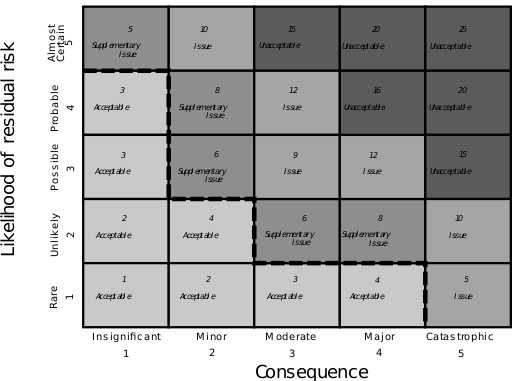
An operator is recycling plastics, and there are several emissions points where vapors and particulates from the recycling process are escaping in to the air, of particular concern may be VOCs;
By assessing volumes, concentrations, dilution and sensitivity of
receptors a risk level can be deduced. This information can be used to;
Wlofab [CC BY-SA 4.0], via Wikimedia Commons
SWEL have completed numerous H1 Assessments for various installations and
discharge a
This
If you process contribution (emission) greater than 1% or 10% of the EAL (Environmental Assessment Level) then it will screen out at this stage. The EAL for different substances depends on the potential for harm that they have. For example PM10 particulates are thought to be less harmful than than PM2.5 Particulates and as such have a higher EAL. Some substances such a Chromium 6 have a very very low EAL. Because they are intensely carcinogenic.
In stage two screening various additional variables are added to the model. The main additional variable is Background Concentration. This can help of hinder you cuase in terms of screening out, but in our experience you are more likely to screen out at Stage 2 rather than Stage 1.
BATAEL - Best Available Technique Associated Emissions Level
EAL - Environmental Assessment Level
EQS - Environmental Quality Standard
H - Horizontal (Guidance)
NCCC - National Customer Contact Centre
OPRA - Operational Risk Appraisal
PC - Process Contribution
PEC - Predicted Environmental Concentration
PHS - Priority Hazardous Substance
PCOP - Photochemical ozone potential
Q95 - Freshwater flow equalled or exceeded for 95% of the year
TraC - Transitional and Coastal
The H1 risk assessment is the cornerstone of the UK’s environmental permitting regime for bespoke installations. Using the Environment Agency’s dedicated software, we quantify the impact of a site's activities on air, water, and land. The methodology follows a structured, tiered approach, beginning with basic source-pathway-receptor identification and progressing through complex numerical screening. By inputting process data—such as emission rates and stack heights—the software calculates whether a site’s environmental footprint is "significant." SWEL utilizes this tool to justify permit applications, ensuring that industrial operations are designed with robust environmental safeguards that satisfy regulatory scrutiny.
Environmental Assessment Levels (EALs) are the benchmarks used by regulators to judge the acceptability of pollutant concentrations in the ambient air. Each chemical substance is assigned a specific EAL based on its toxicity and potential for long-term or acute harm to human health. In an H1 assessment, we compare your site's Process Contribution (PC) against these levels. If an emission is below 1% of the long-term EAL, it is typically screened out as insignificant. Understanding these thresholds is vital, as exceeding an EAL necessitates either a reduction in emissions at the source or more advanced atmospheric dispersion modeling.
Environmental Quality Standards (EQS) are legal limits set to protect the aquatic environment, covering discharges to rivers, estuaries, and coastal waters. These standards ensure that hazardous substances do not reach concentrations that would harm fish, invertebrates, or the wider ecosystem. During a H1 water impact assessment, SWEL calculates the "Predicted Environmental Concentration" by considering the upstream background quality and the river's low-flow (Q95) characteristics. If the discharge causes the waterbody to exceed the EQS, or takes up more than 10% of the available "headroom," mitigation or more sophisticated mixing zone modeling becomes mandatory to maintain compliance.
Best Available Techniques (BAT) represent the most effective and advanced
stage in the development of activities and their methods of operation. Under the
Industrial Emissions Directive, operators must demonstrate that they are using
BAT to prevent or reduce emissions. BAT-Associated Emission Levels (BATAELs) are
the specific numerical ranges provided in BREF documents that define what a
"well-performing" plant should achieve. SWEL provides the technical "heavy
lifting" required to justify why a specific technology was chosen, ensuring your
operation aligns with current BAT conclusions while remaining cost-effective and
operationally viable.
Process Contribution (PC) and Predicted Environmental
Concentration (PEC)
The H1 screening process relies on two primary metrics: Process Contribution (PC) and Predicted Environmental Concentration (PEC). The PC represents the impact of the site's emissions in isolation. However, the regulator is also concerned with the cumulative effect on the environment. Therefore, we calculate the PEC by adding the PC to the existing "background" concentration of that pollutant in the local area. If the PEC is high—often due to existing heavy industry or traffic—it may "screen in" for further assessment even if the site's individual contribution is relatively small. Accurate PEC calculation is critical for a "duly made" permit application.
Volatile Organic Compounds (VOCs) and Particulates (PM10 and PM2.5) are high-priority pollutants in any industrial risk assessment. VOCs can range from simple solvents to highly carcinogenic substances like Chromium VI, each requiring a specific screening strategy. Particulates are assessed based on their diameter, as smaller particles can penetrate deeper into the lungs. SWEL uses H1 software to screen these emissions by evaluating stack exit velocities, temperatures, and mass release rates. This screening determines if expensive abatement technology, such as thermal oxidizers or bag filters, is required to prevent local air quality standard breaches.
Beyond local toxicity, H1 assessments account for broader "Global Impacts." Global Warming Potential (GWP) measures the climate impact of greenhouse gas emissions (like CO2 or Methane) associated with both direct processes and indirect energy consumption. Photochemical Ozone Potential (PCOP) assesses the potential for a site’s VOC or NOx emissions to react with sunlight and create "ground-level ozone" or smog. SWEL quantifies these impacts to provide a holistic view of a site's environmental performance. This data is increasingly used to satisfy "Net Zero" requirements and corporate social responsibility (CSR) reporting during the planning stage.
When a pollutant fails to "screen out" in the basic H1 software, detailed atmospheric dispersion modeling using AERMOD becomes necessary. Unlike the simplified H1 tool, AERMOD uses complex mathematical algorithms, local hourly meteorological data, and 3D terrain information to simulate how a plume moves through the air. This provides a much more accurate prediction of concentrations at specific sensitive receptors, such as schools or hospitals. SWEL integrates AERMOD results into the final permit application, often proving that emissions are acceptable in the real world, thereby saving clients from the capital expense of unnecessary abatement upgrades.
