 Southwest
Environmental LimitedSouthwest
Environmental Limited
Southwest
Environmental LimitedSouthwest
Environmental Limited| London |
| 02076 920 670 |
| Exeter |
| 01392 927 961 |
| Manchester |
| 01612 970 026 |
| Bristol |
| 01173 270 092 |
Please find the below Google Maps which shows the location of Stations (Bases) in Antarctica.
There are currently around 70 permanent research stations scattered across the continent of Antarctica, representing 29 countries. 1 These bases serve as hubs for scientific research, exploration, and international cooperation in one of the harshest environments on Earth.
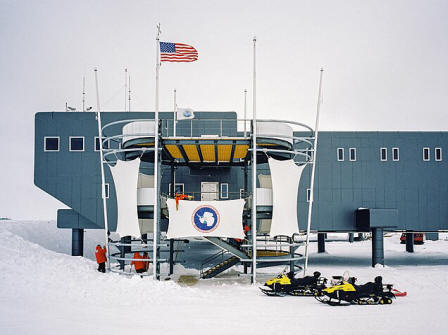
Image: By Cmichel67 - The Amundsen–Scott Station in 2018. In the foreground is Destination Alpha, one of the two main entrances.
By clicking on each map pins you will see:
You can contact the management teams for antarct bases by using the data that is included on the google map above.
The below section was written by a machine.
Antarctica represents the pinnacle of remote operational challenges, hosting approximately 70 permanent research stations operated by 29 different nations. This interactive map provides a technical overview of the scientific infrastructure distributed across the continent, offering critical data on station locations, coordinating countries, and site-specific facilities such as wet and dry laboratories.
Understanding the logistical footprint of these bases is essential for international cooperation and environmental management in one of the world's most sensitive ecosystems. For professionals involved in remote site management, the data points included in this resource provide insight into:
While Antarctica is geographically distant, the principles of managing human impact in extreme environments are core to modern consultancy. The rigorous standards required for Antarctic operations—governed by the Antarctic Treaty System—parallel the requirements for a high-level Environmental Impact Assessment (EIA) or a complex environmental compliance strategy in the UK.
By mapping these locations, we provide a baseline for understanding human activity in remote regions. This spatial intelligence supports broader sustainability goals and informs the type of thorough Phase 1 Desktop Study required for infrastructure projects in challenging terrains. With over 900 projects delivered globally and across the UK, SWEL offers the technical authority and accredited expertise (IES/FGS) to interpret complex geographic data and regulatory requirements.
Ensuring operational resilience in Antarctica requires a deep understanding of environmental geology and waste management protocols. These global data points help illustrate the scale of international scientific efforts and the infrastructure needed to support them. Whether you are assessing local development or international research hubs, our team provides the professional insight needed to navigate complex environmental landscapes.