 Southwest
Environmental LimitedSouthwest
Environmental Limited
Southwest
Environmental LimitedSouthwest
Environmental Limited| London |
| 02076 920 670 |
| Exeter |
| 01392 927 961 |
| Manchester |
| 01612 970 026 |
| Bristol |
| 01173 270 092 |
If you need a Battery Safety Management Plan (BSMP) for your project then please look no further we have been mitigating environmental risks from batteries for over a decade and are well placed to assist.
As the global transition to renewable energy and electric vehicles accelerates, the reliance on high-capacity battery systems—specifically Lithium-ion (Li-ion) technology—has reached unprecedented levels. While these systems are efficient, they present unique structural and chemical risks. A robust Battery Safety Management Plan (BSMP) is no longer just a recommendation; it is a critical operational requirement for insurance compliance, environmental protection, and site safety.
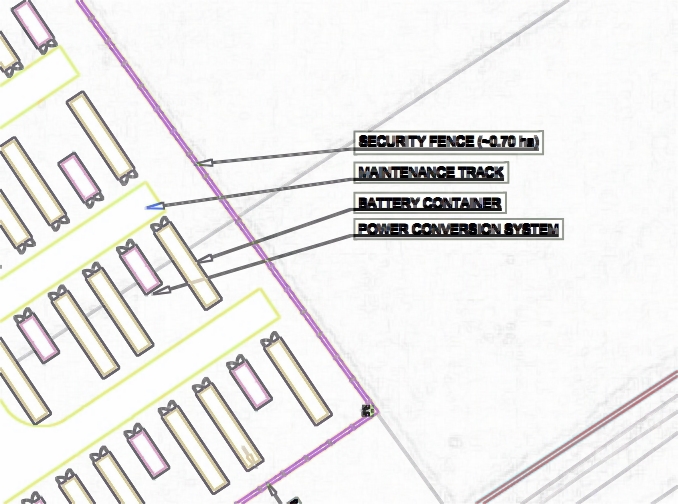
Southwest Environmental has been at the forefront of battery compliance for over 10 years. Our decade of experience in this niche sector allows us to navigate the evolving regulatory landscape with precision. We understand that a BSMP is not a "one size fits all" document. It must be a bespoke strategy tailored to the specific chemistry, scale, and location of your battery assets.
A Battery Safety Management Plan is intrinsically linked to a site’s
Fire Prevention Plan (FPP).
In the event of a "thermal runaway"—a phenomenon where a battery cell
enters an uncontrollable, self-heating state—the primary objective is
containment and suppression.
When writing a BSMP, we integrate FPP core principles to ensure:
By aligning the BSMP with the FPP, we ensure that site operators and emergency services have a unified roadmap for incident response, significantly reducing the likelihood of catastrophic loss.
One of the most overlooked aspects of battery safety is the
management of firewater
runoff.
This is where Southwest Environmental’s in-house drainage expertise
becomes a decisive advantage for our clients.
During a battery fire, vast quantities of water are often used for
cooling. This water quickly becomes
contaminated with heavy
metals, hydrofluoric acid, and other toxic byproducts of battery
combustion. If this firewater enters the local
sewage system or natural watercourses, the environmental liabilities
and subsequent fines can be staggering.
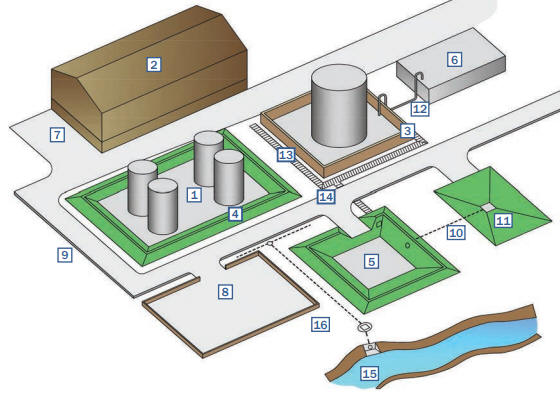
Our drainage specialists ensure your BSMP includes:
By integrating drainage engineering directly into the BSMP, we provide a holistic safety solution that protects not just your hardware, but the surrounding environment and your legal standing.
A Battery Safety Management Plan is a sophisticated document that bridges the gap between fire safety and environmental stewardship. With over 10 years of experience and specialized in-house drainage capabilities, Southwest Environmental provides the technical depth required to secure your facility.
Would you like me to draft a specific checklist of the drainage infrastructure requirements typically included in a BSMP?
The rapid expansion of Battery Energy Storage Systems (BESS) across the UK infrastructure grid has introduced unique fire safety and environmental challenges. A robust Battery Safety Management Plan (BSMP) is now a critical requirement for securing planning consent and environmental permits for large-scale lithium-ion installations. Our consultancy specializes in identifying the specific technical risks associated with energy storage, ensuring that your facility is designed with the necessary separation distances and fire suppression technologies to prevent catastrophic incidents.
The primary technical concern in any battery installation is thermal runaway—a phenomenon where an exothermic reaction within a battery cell triggers a self-sustaining fire that is notoriously difficult to extinguish. Our BSMP methodology focuses on propagation prevention, utilizing internal cell monitoring and advanced cooling strategies to isolate potential failures. By detailing these technical safeguards within your management plan, we provide planning authorities and insurers with the evidence needed to prove that the risk of fire spread between battery containers has been minimized to the furthest extent possible.
Securing an environmental permit from the Environment Agency (EA) or Natural Resources Wales (NRW) for battery storage requires a detailed analysis of potential "accidental emissions." In the event of a fire, the runoff of contaminated cooling water and the release of toxic gases (such as hydrogen fluoride) must be managed. Our BSMP includes comprehensive secondary containment strategies and atmospheric dispersion modeling, ensuring that your project aligns with the latest regulatory guidance for hazardous material management and environmental protection.
A critical component of a successful BSMP is the Emergency Response Plan (ERP), developed in close coordination with local Fire and Rescue Services (FRS). We facilitate the technical liaison required to ensure that first responders have the site-specific information necessary to manage a lithium-ion fire safely. This includes clear mapping of water supplies, isolation points, and thermal imaging access, reducing the response time and ensuring that emergency protocols are integrated into the facility's day-to-day operational management.
Whether you are developing a standalone "front-of-the-meter" storage asset or an integrated renewable energy hub, our Battery Safety Management Plans provide the scientific foundation for your Planning Statement. This "True Data" approach moves beyond generic safety checklists, offering site-specific insights that are vital for discharging planning conditions. This technical capability is a key reason why SWEL has successfully delivered over 900 projects across the UK, providing the geospatial and safety detail needed to secure successful outcomes in the energy sector.