 Southwest
Environmental LimitedSouthwest
Environmental Limited
Southwest
Environmental LimitedSouthwest
Environmental Limited| London |
| 02076 920 670 |
| Exeter |
| 01392 927 961 |
| Manchester |
| 01612 970 026 |
| Bristol |
| 01173 270 092 |
Implementation of PAS100 and CQP
It is becoming more and more common in the UK for composters to have a PAS100 certified process. There are a number of reasons for this. SWEL have considerable experience in the implementation of quality management systems such as PAS100 with regard to composting. Compost vs Artificial Fertilizers
Non PAS100 (& CQP) compost is still classed as a waste, and therefore there is further legislative requirements for its onward journey from your composting facility, this will require land spreading mobile plant permits, or alternative. For example a local farmer may wish to take some of your compost, but in order for him to legally receive it you will have to have a spreading permit, and a deployment authorization from the EA, relating to his land. With PAS100 & CQP this rigmarole can be avoided
 PAS 100
certification is gained by putting in place a management system to
control, document, and verify that your composting process in turning
out quality stuff.
PAS 100
certification is gained by putting in place a management system to
control, document, and verify that your composting process in turning
out quality stuff.
Inputs to a PAS100 system are carefully recorded, and a thorough paper
trail must be maintained linking input materials, the selection process
maintained, and waste types to the "batches" of compost that are formed.
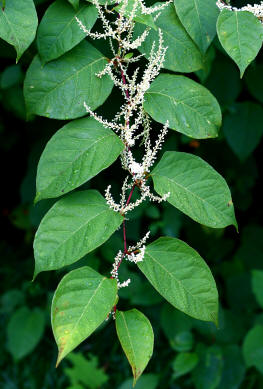
Each load to site may be inspected for problem materials such as
plastics or
Japanese knot weed.
"Batches" of compost are monitored throughout the PAS 100 process to
ensure correct temperatures and moisture levels are maintained, this
ensure eradication of pathogens and living plant tissue.
Export, once materials have been composted there
export from site is also documented according to PAS100, this ensures
that from arrival on site to spreading / bagging the compost is
traceable back to it source.
More on PAS100
Environmental Permitting
Image:
liz west [CC BY 2.0], via Wikimedia Commons
The below section was written by a machine.
For composting operators, achieving the BSI PAS 100 specification is the gold standard for demonstrating product quality and safety. PAS 100, when combined with the Compost Quality Protocol, allows processed organic waste to cease being classified as waste, enabling it to be sold as a high-value product rather than disposed of at a cost. This transition is essential for circular economy business models and long-term sustainability.
The path to certification requires a robust Quality Management System (QMS) and rigorous technical monitoring. Key areas of focus include:
PAS 100 certification is deeply linked to your environmental compliance obligations. While a permit regulates the operation's impact on the environment, PAS 100 regulates the output quality. For sites operating under Standard Rules Permits, maintaining these quality standards is often a key expectation of the Environment Agency during inspections.
At SWEL, we act as technical consultants to bridge the gap between complex BSI requirements and daily site operations. We assist in the drafting of site-specific Quality Manuals and provide guidance on PAS 100 procedures to ensure your material meets the required specification for unrestricted use in agriculture or landscaping.
Navigating the audit process can be challenging. By leveraging our experience with over 900 projects, we help operators minimize "non-conformances" during certification body visits. Whether you are setting up a new site or refreshing an existing Environmental Management System, our expertise ensures your facility remains at the forefront of the UK organic recycling industry.
