Monthly Archives: December 2025

Breaking News from Somerset Council: P-Credit Reservation Notice No Longer Needed for Planning Approval!

Breaking News from Somerset Council: P-Credit Reservation Notice No Longer Needed for Planning Approval!

Somerset, UK – In a significant move set to streamline the planning process, Somerset Council has announced a crucial policy change regarding Nutrient Neutrality (NN). Developers and landowners in the region can now breathe a collective sigh of relief, as the requirement for a Reservation Notice will no longer be a hurdle for the determination of planning applications using P-Credits.

This highly anticipated update is poised to accelerate the planning approval timeline, potentially unlocking numerous projects that have been stalled due to the complexities of securing nutrient mitigation upfront.

What Does This Mean For You and Your Clients?

The core of this policy shift lies in separating the determination of a planning application from the securing of P-Credits.

The Good News (for Planning Determination):

No Upfront P-Credit Reservation: You will no longer need to secure P-Credits for your planning consent to be awarded. This means applications can progress through the council’s assessment and receive approval without a pre-existing credit reservation in place.

The Crucial Caveat (for Project Commencement):

P-Credits Still Required for Commencement: It is vital to understand that while a reservation notice isn’t needed for approval, P-Credits will still be an absolute requirement prior to the commencement of any development works. This ensures that environmental protection remains paramount, even as the administrative process is simplified.

Key Requirements Remain: NNAMS and sHRA

Despite the positive change, some core components of the Nutrient Neutrality assessment remain in place:

Nutrient Neutrality Assessment and Mitigation Strategy (NNAMS): You will still need to prepare a comprehensive NNAMS to demonstrate how your development achieves nutrient neutrality.

Shadow Habitats Regulations Assessment (sHRA): A sHRA will also be necessary for planning applications to be determined.

What Happens Between Consent and Commencement?

This is where some questions arise, and we anticipate further clarification from Somerset Council. Based on current understanding, here’s what we expect:

Potential sHRA Resubmission: If there are changes to the type of mitigation or even the supplier of P-Credits between planning consent and the discharge of pre-commencement conditions, it is likely you will have to resubmit your sHRA. This ensures the chosen mitigation aligns precisely with the approved plan.

Why the Policy Shift?

While the official reasons are yet to be fully detailed, it is speculated that the council aims to speed up the determination of planning applications. The efficiency of the nutrient credit market may have played a role, suggesting that credits are readily available, making the upfront reservation less critical for the initial approval stage.

This change is a welcome development for many in the construction and development sectors in Somerset, offering a clearer path to planning approval.

Stay tuned for further updates as more details emerge from Somerset Council regarding this significant policy alteration!
The Hidden Risks: Why BNG Baseline Surveys Demand a Professional Ecologist 

The Hidden Risks: Why BNG Baseline Surveys Demand a Professional Ecologist

I am not very risk averse. I don’t wear a helmet when I go skiing. I eat a lot of saturated fats, and when I am undertaking projects for hobbies (building extensions / forestry etc) then I don’t follow many safety precautions. My instinct of self preservation is set fairly low. . . . . .

BUT. One topic I am very careful with is Ecology. Because I don’t want to go to jail. . . . and please don’t think I am over-egging this 2 guys got sent to jail for chopping a tree down last year.

With mandatory Biodiversity Net Gain (BNG) now a core part of the planning process in England, the temptation for developers and landowners of smaller sites to fill out the baseline assessment themselves is understandable. After all, the Small Sites Metric (SSM) is marketed as being usable by a “competent person.”

However, to rely solely on a layperson’s judgment for the BNG baseline survey is to expose the entire project to significant risks—legal, financial, and planning—that far outweigh any initial cost savings. The BNG metric is a legal tool designed by ecologists, but only an expert can navigate the fine line between satisfying a planning condition and avoiding a criminal offence.

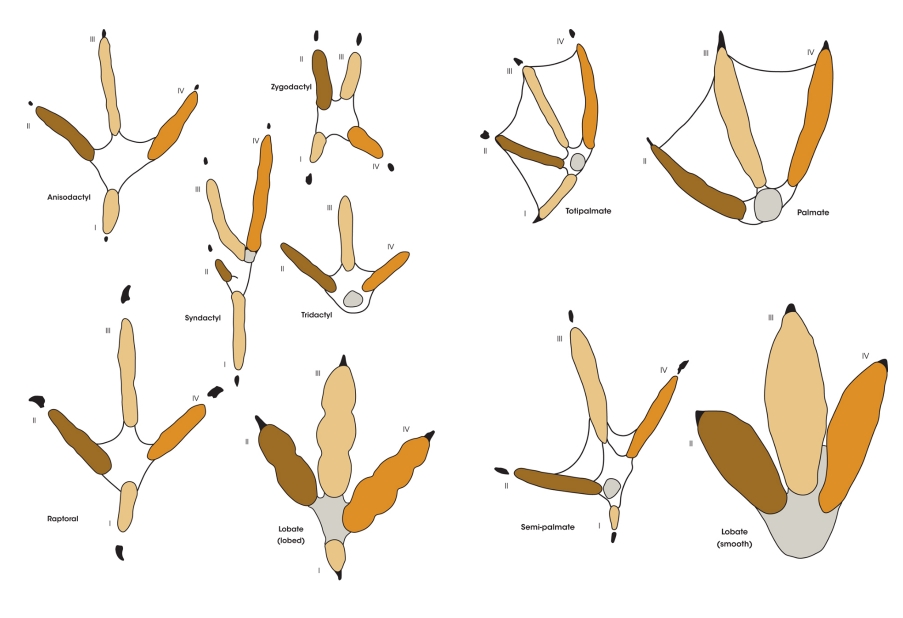
Tracks and Signs of the Birds of Britain and Europe (Bloomsbury Naturalist) – An Excellent Book for Species Identification

The above is just ones of the 100’s of figures contained within “Tracks and Signs of the Birds of Britain and Europe” it takes years of experience to be able to read these signs. I wouldn’t know which of the above are protected and which are not. That is why I would recommend getting an ecologist to do you BNG baseline survey.

1. The Critical Flaw: The Habitat Condition Trap

The BNG Metric, whether the full Statutory Metric or the simplified SSM, relies on accurately defining the type and condition of every habitat on site. This is where a layperson is most likely to fail the Local Planning Authority (LPA) check.

An ecologist is trained in the UK Habitat (UKHab) Classification system and uses standardised criteria to score habitat condition. For example, what looks like “long grass” to a layperson might be identified by an ecologist as Low-Quality Modified Grassland (low biodiversity value), or, critically, as Priority Habitat Lowland Meadow (high biodiversity value). Misclassifying a high-value habitat as a low-value one:

Massively underestimates the baseline biodiversity unit score.

Requires far more compensatory habitat creation (often making the development unviable).

Guarantees that the LPA will reject the submission, leading to months of expensive delays while a professional survey is commissioned and the metric is re-run.

2. The Legal Threat: Protected Species Liability

The BNG Metric and Protected Species Law operate on separate tracks, but they meet on the ground—your development site. The greatest risk is criminal prosecution under wildlife legislation.

Protected species (such as bats, badgers, and great crested newts) and their habitats are protected by law, primarily the Wildlife and Countryside Act 1981 and the Conservation of Habitats and Species Regulations 2017. Disturbing or destroying their resting places is a criminal offence, even if it is done accidentally.

A layperson’s baseline survey only focuses on the habitat units and cannot definitively rule out protected species. For instance, an old shed or a mature tree hole may be a bat roost. A pond may hold a population of Great Crested Newts. An ecologist, through a Preliminary Ecological Appraisal (PEA), specifically flags these features and identifies the need for mandatory, species-specific surveys. A layperson who fails to spot these signs and proceeds with demolition is committing a crime.

Recent Criminal Sentences

The risk is not theoretical. Criminal sentences for wildlife offences associated with development are becoming increasingly severe:

  • Financial Penalties: Fines for companies and individuals can be unlimited for offences relating to Protected Species.
  • Custodial Sentences: Individuals found guilty of intentional or reckless damage can face imprisonment. For instance, prosecutions have resulted in significant fines for developers found guilty of destroying badger setts or disturbing bat roosts, often running into the tens of thousands of pounds, alongside orders to pay massive remedial costs and prosecution costs.
  • Somerset Example: A recent case in Somerset saw a caravan park owner ordered to pay over £116,000 for disturbing a Site of Special Scientific Interest (SSSI), demonstrating the courts’ willingness to issue punitive financial orders under the Proceeds of Crime Act where clear environmental harm and disregard for the law are found.

In conclusion, while the SSM is designed to be accessible, a layperson completing the BNG baseline is making critical ecological judgments that carry profound legal and financial weight.

An approved BNG plan is not a “get out of jail free” card for protected species law. Engaging a qualified ecologist is the only way to ensure the data is accurate, the project avoids criminal risk, and the planning process is delivered efficiently. Don’t risk a development delay or a criminal prosecution to save on an essential ecological report.