
Building Back Better: How SWEL Delivered Compliant BNG for a Constrained London SW12 Development
Achieving the mandatory 10% Biodiversity Net Gain (BNG) in densely developed areas like London is a significant challenge. Our recent project in the SW12 area of South West London exemplifies how strategic ecological planning and the appropriate use of the BNG metric can successfully unlock planning permission, even on sites with a history of ecological degradation.
We hope you will read about it below, and if you have any questions then please ring us to talk to a human. 🙂
The Site and the BNG Baseline Hurdle
Southwest Environmental (SWEL) was commissioned to prepare a BNG report for a proposed development that will see the construction of four new properties. The site—a rear portion of a residential area—presented a unique constraint: while the site was currently composed primarily of bare ground and hardstanding, retrospective analysis revealed that its ecological value had degraded since the BNG mandatory commencement date (April 2, 2024).
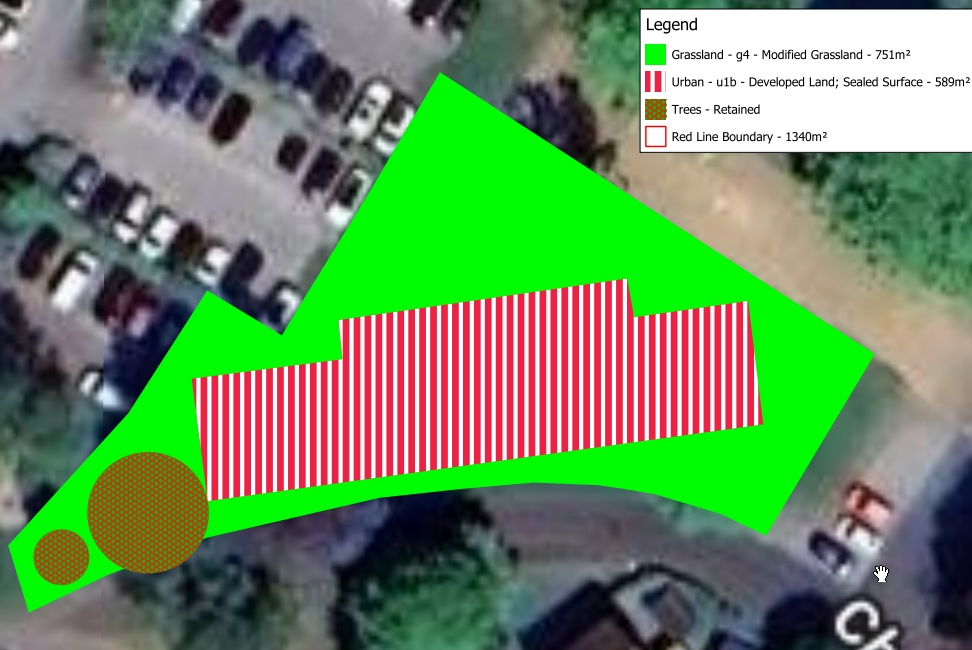
Example Plans Created by SWEL’s Ecologist
Under the BNG rules, if a development is submitted after this date, the baseline must reflect the site’s biodiversity value before any recent degradation occurred (specifically since January 30, 2020). Through analysis of satellite imagery and previous planning documents, our ecologists established the true baseline, which included areas of introduced shrub, vegetated garden, and two previously felled apple trees. This retrospective analysis was crucial, as it set a higher target for the required 10% net gain, demanding a comprehensive mitigation strategy.
Calculating the Gain and Strategising Mitigation
Using the statutory Biodiversity Metric Tool, we calculated the initial baseline habitat score and determined the minimum post-development habitat score required to achieve the necessary 10% net gain.
To meet this goal, our strategy involved a combination of powerful on-site ecological improvements and the strategic use of off-site Biodiversity Credits:
- High-Impact Tree Planting: We specified the planting of several 3-meter tall trees, including species like Amelanchier lamarckii, Magnolia denudata, and Prunus avium. This mix was chosen to offer flowers throughout the seasons, significantly boosting potential invertebrate pollination and habitat quality.
- Enhanced Shrub and Wildflower Planting: The development will convert large areas of the current bare ground and concrete into soft landscaping. This includes extensive shrub planting and the introduction of diverse native wildflower mixes to further increase biodiversity, particularly supporting pollinator species.
- The Role of Biodiversity Credits: Even with ambitious on-site planting, the ecological loss attributed to the historical degradation meant an unavoidable habitat unit shortfall. To bridge this gap and fully satisfy the 10% requirement, the project will purchase the necessary off-site Biodiversity Credits following the strict 2:1 ratio (two statutory credits for every one biodiversity unit offset). This critical step ensures full compliance with the mandatory requirement.
Future-Proofing with Additional Ecological Measures
Beyond the minimum 10% gain, we also provided additional suggestions to future-proof the site and maximise its ecological value:
Invertebrate Habitat: Suggestions included creating log piles and implementing ‘insect hotels’ to promote the growth of the crucial local invertebrate population.
Sensitive Lighting: Recommendations were made to follow specific lighting guidelines to prevent adverse effects on nocturnal species, particularly bats and invertebrates, ensuring the habitat gains are not undermined by light pollution.

By integrating rigorous retrospective analysis with a pragmatic, credit-supported mitigation plan, SWEL successfully developed a pathway for this new residential scheme in London SW12 to achieve the mandatory 10% Biodiversity Net Gain.
Project Success in London SW12
This London SW12 BNG assessment demonstrates SWEL’s expertise in navigating the complex legal requirements of urban development, particularly the mandatory 10% Biodiversity Net Gain. Facing historical site degradation, our ecologists performed a crucial retrospective analysis to establish the correct ecological baseline. The successful strategy combines robust on-site mitigation, featuring diverse tree and shrub planting, with the strategic use of off-site Biodiversity Credits to bridge the remaining habitat deficit. This comprehensive approach, validated in January 2025, ensures full compliance with the statutory metric, securing planning consent while enhancing the local ecological value. Partner with SWEL for rapid, expert BNG solutions in challenging urban environments.