Category Archives: Habitat Regulation Assessment

Shadow Habitats Regulation Assessment for Residential Development in Wedmore, Somerset

Shadow Habitats Regulation Assessment for Residential Development in Wedmore, Somerset

Southwest Environmental Limited was commissioned by a planning consultancy to undertake a Shadow Habitats Regulation Assessment (SHRA) for a proposed development in Wedmore, Somerset. The project site is located within the planning jurisdiction of Somerset West and Taunton Council. The development involves the conversion of an existing residential dwelling into two separate residential properties. This comprehensive assessment was completed with a short lead time to ensure the applicant could proceed with their planning submission without delay.
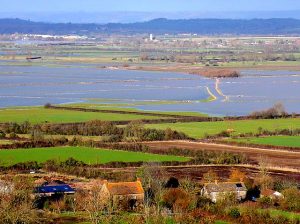
High-angle view of stone cottages in Lower Burrow overlooking green farmland and flooded fields across West Moor on the Somerset Levels.

Overview of Lower Burrow and floodwaters on West Moor in the Somerset Levels.

Regulatory Context and Site Designations

The SHRA was prepared in strict compliance with the Conservation of Habitats and Species Regulations 2017 (as amended). The assessment is necessary under Regulation 63 to determine the potential effects of nutrient changes caused by the project on the River Axe and the Somerset Levels and Moors Ramsar site. The Ramsar site supports vulnerable ecological communities, including 17 species of Red Data Book aquatic invertebrates and rare vascular plants, making it highly sensitive to eutrophication and water chemistry changes

Nutrient Loading Assessment

Stage 1 Screening identified a potential impact pathway during the operational phase of the development Foul water from the proposed residential use would be discharged to public sewers, subsequently discharging via the Wedmore Water Recycling Centre (WRC) to tributaries of the River Axe.

In Stage 2 Appropriate Assessment, the Somerset Levels and Moors Phosphorous Budget Calculator was utilized to quantify the expected nutrient output. The calculation determined that, without mitigation, the development would result in a phosphorus loading of 0.22kg TP/yr (Post 2025), a figure that includes a 20% precautionary buffer. Any unmitigated increase in phosphorus could adversely affect the conservation objectives of the Ramsar site.

Mitigation and Nutrient Neutrality

To eliminate adverse effects on site integrity, mitigation measures were formally integrated into the project plan. The calculated budget of 0.22kg TP/year will be entirely offset through the purchase of Phosphorus Credits. The reservation of these credits will be secured as a pre-commencement condition, managed and monitored by Somerset County Council.

With this mitigation applied, the additional nutrient load from the development is reduced to zero, rendering the project entirely phosphorus neutral. The assessment concludes that the project will not adversely affect the integrity of the Somerset Levels and Moors Ramsar Site or the River Axe.

For more information on our environmental assessment capabilities and nutrient neutrality calculations, please visit our Habitats Regulations Assessment services page.

Please contact us if you would like a fixed price quotation.

Do I Really Need An NNMAS?

Do I Really Need An NNMAS?

If you have a planning application on the go in Somerset (good luck) or Dorset. Then you may have been asked for an NNAMS (Somerset) or NNMAS (Dorset).

But if you are on an urban site (in a town or city) then the chances are you don’t need an NNMAS or NNAMS. . . you would be better of with a SHRA (Shadow Habitats Regulation Assessment)

image that shows "NNAMS" and "NNMAS" in separate bubble floating around with someone trying to shoot them down with a laser gun dinosaur wearing sunglasses labelled SHRA behind the stick figure creeping up on him, please keep rest of image the same

NNMAS or NNAMS – – -snap: SHRA

NNAMS or NNMAS. . . . It’s just a name.

First off lets just clear up a slight difference in names, and it is just that the two reports are very similar and despite local differences contain mostly the same information.

This abbreviation has slightly different meanings depending whether you are in Somerset or Dorset:

  • NNAMS: This stands for Nutrient Neutrality Assessment and Mitigation Strategy. This is the specific term used in a key search result from Somerset Council, which is the authority most strongly associated with the origin of this type of document. The council’s guidance refers to this exact phrase and abbreviation.
  • NNMAS: This stands for Nutrient Neutrality and Mitigation Statement. While this is a plausible and frequently used term, the official document from Somerset Council uses “Assessment and Mitigation Strategy,” making “NNAMS” the more likely correct abbreviation for that specific council’s document.

Why You Might Not Need The NNAMS or NNMAS

There are certain situations where you might not need an NNAMS or NNMAS.

You Don’t need a NNAMS or NNMAS

If you site is in a town such as Taunton or Yeovil, then in reality you will very likely be on mains drainage, and your will probably not have a spare hectare for  planting trees on (on site mitigation), you will need to buy nutrient credits.

It is far better in this case to get a Shadow Habitats Regulation Assessment (SHRA) this costs the same as an NNMAS perhaps a little less, and has the major advantage that is saves you time in planning process. Explanation:

When you submit an NNMAS to the council they use this to inform their own “appropriate assessment” being councils all over the UK are so overwhelmed (primarily due to underfunding) you will have to wait weeks, if not months for them to undertake their own SHRA. So why not do it for them. They would need the NNMAS anyway. . .

You Do need a NNAMS or NNMAS

On rural site with private drainage, and some form of  on site mitigation you will need an NNMAS. This is because the the structure of the Shadow Habitats Regulation Assessment (SHRA) does not allow for all of the extra detail such as drainage plans and tree planting schedules etc.

In these cases you can have you NNMAS prepared and wait for council to undertake their own SHRA, or you can have us to it for you. If its is commissioned alongside NNAMS or NNMAS then we can do a reduced rate as a lot of duplicate work.

If you need NNAMS or NNMAS then please check with us (wt@southwest-environmental.co.uk), as you may not need it, and there may be a better option for you.