
Preliminary Ecological Appraisal for Residential Development in Wickford, Essex
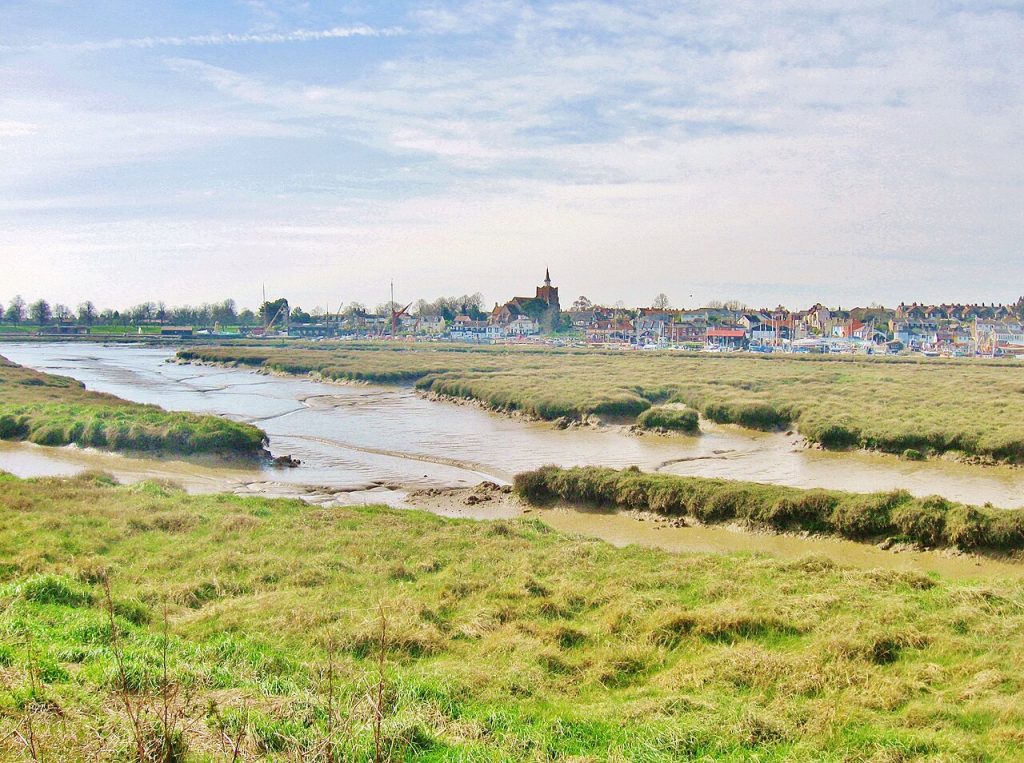
Low tide on the River Hythe Essex, showing exposed saltmarsh mudflats with a marina and town skyline in the background.
Southwest Environmental Limited was instructed by a planning consultancy to prepare a Preliminary Ecological Appraisal (PEA) for a proposed residential development in Wickford, Essex[cite: 4]. The site is located within the jurisdiction of the local planning authority in Essex[cite: 4]. The proposed development encompasses the erection of two chalet bungalows, alongside associated amenity space and parking facilities[cite: 4]. This ecological assessment was completed with a short lead time to facilitate the applicant’s planning submission schedule.
Methodology and Baseline Habitat Survey
A desktop review and field survey were conducted by a Project Ecologist[cite: 4]. The habitat classification was mapped following the standard methodology set out by the UK Habitat Classification (UKHab)[cite: 4]. The survey identified the site primarily as modified grassland featuring a heavily maintained, short sward[cite: 4]. Additional habitat features recorded on the site include a small area of sparsely vegetated land, a sealed surface paving area, and a line of trees situated along the northern boundary[cite: 4].
Protected Species Assessment and Statutory Compliance
The site was assessed for its potential to support protected species in accordance with the Wildlife and Countryside Act 1981 and the Conservation of Habitats and Species Regulations 2017[cite: 4]. The appraisal concluded that the site has a low likelihood of supporting bats, reptiles, mammals, and amphibians[cite: 4]. This is primarily due to the heavily managed nature of the grassland, the open exposure of the site, and a lack of suitable microhabitats or roosting features within the small trees[cite: 4].
The line of trees does present a high likelihood for supporting breeding birds and common invertebrates during appropriate seasons[cite: 4]. To ensure compliance with national legislation protecting nesting birds, any vegetation clearance or tree felling must be undertaken outside the typical bird breeding season of March to August, unless preceded by a nesting bird check conducted by a qualified ecologist[cite: 4].
Site Evaluation and SSSI Proximity
Desk studies indicated that the site is located within the Impact Risk Zone of Influence for the Crouch and Roach Estuaries Site of Special Scientific Interest (SSSI)[cite: 4]. This SSSI is designated for its intertidal mud, saltmarsh, and grazing marshes, which support internationally important numbers of Dark-bellied Brent Geese[cite: 4]. Due to the low biodiversity value of the proposed development site, its former agricultural nature, and poor habitat quality, the project is anticipated to have a negligible effect on the SSSI[cite: 4].
Ecological Recommendations and Conclusion
The site is evaluated as having low nature conservation value at a county or district level[cite: 4]. Consequently, no further Phase 2 protected species surveys are recommended for this project[cite: 4]. To achieve localized biodiversity enhancements, the implementation of native pollinator plant species, bat boxes, and bird boxes has been formally advised within the site plan[cite: 4].
For more information on our environmental surveying capabilities, please visit the Preliminary Ecological Appraisal services page on www.southwest-environmental.co.uk.
Please contact us if you would like a fixed price quotation.

