Category Archives: Parking Surveys

“Default Yes” Housebuilding Near Train Stations

Unlocking Potential: Navigating “Default Yes” for Housing Near Stations

The UK government’s recent move toward a “Default Yes” approach for housebuilding near well-connected train stations marks a significant shift in planning policy. By streamlining the National Planning Policy Framework (NPPF), the aim is to accelerate the delivery of high-density, sustainable homes where they are needed most. However, building in such close proximity to active rail lines brings unique technical challenges that require expert navigation.

Managing Noise and Vibration

Developing sites adjacent to railway infrastructure necessitates rigorous environmental assessments. At the planning stage, a Noise Assessment is vital. We refer to ProPG: Planning & Noise, which provides a framework for managing noise in new residential developments. This is often coupled with internal sound insulation designs to meet BS 8233:2014 standards, ensuring residents enjoy a high-quality living environment despite the external hum of the network.

Equally critical is the Vibration Assessment. Railway traffic can cause ground-borne tremors that impact human comfort. We assess these risks in accordance with BS 6472-1:2008, which evaluates the “Vibration Dose Value” (VDV). Understanding these levels early allows for the integration of structural mitigation, such as anti-vibration mountings or specific foundation designs, preventing future complaints and ensuring structural integrity.

The Shift to Car-Free Development

Proximity to transport hubs is the primary driver for “car-free” or “permit-free” developments.

While these schemes reduce carbon footprints and maximise land use, local authorities often require proof that overspill parking won’t saturate neighbouring streets.

To support these applications, we conduct comprehensive Parking Surveys, typically following the “Lambeth Methodology“. These surveys involve “beat” counts during peak residential demand (usually between 00:30 and 05:30) to measure “parking stress” within a 200m walking distance of the site. Demonstrating that the local network can absorb any residual demand is often the final hurdle in securing planning permission.

Proven Expertise

With 15 years of experience in delivering noise and transport reports for complex, high-noise environments, we understand the nuances of railway-side development.

We have supported numerous medium-to-major projects, similar to the below:

  • Twickenham Station Redevelopment: A major mixed-use scheme integrating over 100 homes directly above and adjacent to a busy terminal.
  • Walthamstow Central: High-density residential blocks that leverage exceptional PTAL (Public Transport Accessibility Level) ratings.

Our team provides the technical evidence needed to satisfy both environmental health and highways officers. Given the fast-paced nature of “Default Yes” sites, we offer a short turnaround on all technical reporting to keep your project moving.

Case Studies

Noise Assessment 

Parking Survey 

Approximate Cost

For Noise, Vibration and Parking Surveys you can expect to pay.
Parking Surveys – Bristol

Parking Surveys – Bristol

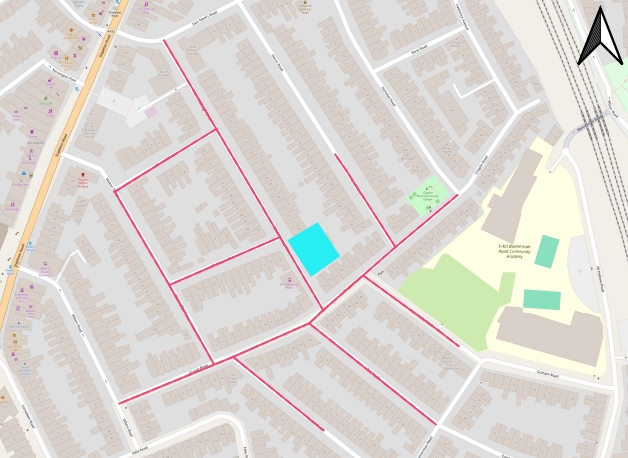
We have recently completed a parking survey in Bristol. The project is summarised below . If you would like a quote for a parking survey then please get in touch. We can carry out Parking Surveys anywhere in the UK.

The Plan Used for the Parking Survey

Zero On-Site Parking Justified for Constrained Bristol Development: Key Takeaways from a Parking Survey Report

A recent Parking Survey Report for a proposed residential development in East Bristol provides a compelling justification for providing zero on-site parking—a strategy that aligns with modern sustainable development goals and Bristol’s local planning policy.

This report, commissioned for a new 6-unit residential scheme, demonstrates how thorough data collection and policy adherence can support reduced car dependency, even in areas with high parking demand.

Key Findings from the Parking Survey Bristol

The development site, which is highly constrained in size (approx. 0.03 hectares), determined that any on-site parking would severely compromise the quality, design, and viability of the residential units and community facilities.

  • Policy Compliance: The proposal is below the maximum standard of 5.4 spaces but is policy-compliant under SADMP Policy DM23, which allows lower provision where justified by site constraints and accessibility.

  • On-Street Availability: An evening peak-time survey (22:10–22:15) across a 150-meter radius revealed an average occupancy of 85.2%, indicating high demand in the area.

  • Available Capacity: Despite high occupancy, approximately 30 parking spaces were found to be available within the survey area during peak residential hours, confirming sufficient on-street capacity.

  • Development Demand: The projected vehicle demand for the 6-unit scheme is low, estimated at only 3.6–4.8 vehicles.

  • Capacity Assessment: The available capacity (30 spaces) is ample, being 6–8 times higher than the anticipated demand, meaning the development’s impact will be manageable and non-stress-creating.

Strategic Location and Sustainable Travel

The report heavily emphasizes the site’s excellent accessibility, which further justifies the zero-parking approach:

  • Public Transport: The site is in close proximity to a major train station (approximately 500m walk) and another station/bus hub (1000m walk), providing quick connections to Bristol City Centre.

  • Walkability: It is highly walkable, with local amenities, shops, and district centers within a 700-meter radius.

  • Cycle Provision: The development encourages sustainable transport by providing comprehensive cycle parking (12 spaces) on site.

Realistic Parking Expectations for Future Residents

The report stresses that residents must rely on on-street parking and manage expectations:

  • Parking is available, but residents may need to park on secondary streets like Chaplin Road or Heron Road, potentially involving a 50–100m walk.

  • This is presented as a realistic urban parking strategy compatible with a sustainable, well-connected city location.

Conclusion: This parking survey Bristol analysis concludes that due to severe site constraints, excellent public transport links, and demonstrable on-street parking availability, providing zero on-site parking is a practical, policy-compliant, and appropriate solution for this urban residential development.

Parking Surveys Bristol