Category Archives: Uncategorised

Biodiversity Net Gain Report – London (NW9)

Streamlining Biodiversity Net Gain: The Library Extension at a London Primary School

Planning a school expansion in a busy urban area like Greater London (NW9) often brings concerns about complex environmental regulations. However, a recent Biodiversity Net Gain (BNG) assessment for a library extension project demonstrates how ecological compliance can be handled efficiently when the baseline impact is minimal.

The project involves a modest 6m extension to an existing school library. By identifying the ecological value of the land early, the development team has established a clear, low-friction path to meeting statutory requirements.

Assessing the Baseline: Minimal Ecological Constraints

The initial site survey, conducted in February 2026, confirmed that the proposed construction area holds very little botanical or habitat value. This is a best-case scenario for developers, as it simplifies the mitigation process.

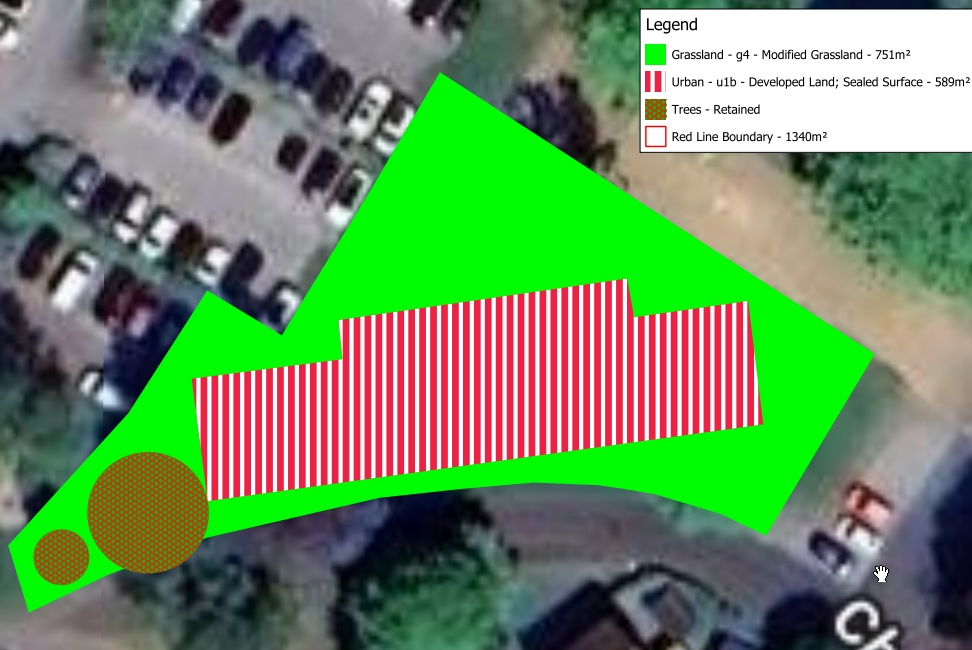
The site currently consists of:

  • Modified Grassland: Regularly mowed lawn area with high foot traffic.

  • Sealed Surfaces: Existing concrete hardstanding.

Because these are categorized as low-value habitats, the “biodiversity cost” of the project is extremely low. The survey concluded that the site has no regional importance and does not serve as a vital corridor for protected species, meaning no complex or expensive wildlife relocation strategies are required.

Former City of London School (Example Photo: This is not the school where we carried out the BNG assessment)

Meeting the 10% Mandate with Ease

Under current UK planning laws, most developments must demonstrate a 10% Biodiversity Net Gain. For this specific project, the “baseline” value was calculated at a mere 0.0122 units. To hit the 10% target, the site only needs to reach 0.0134 units.

The proposed landscape plan doesn’t just meet this target; it far exceeds it, achieving a 104% gain through very simple, low-maintenance additions:

  • Native Tree Planting: The core of the strategy involves planting just two small native trees. Species like Elder, Blackthorn, or Hawthorn are recommended because they are hardy, require minimal upkeep once established, and provide immediate value to local birds and insects.

  • Simple Habitat Enhancements: To further support the “Green Infrastructure” of the school, the plan incorporates bird and bat boxes. These are cost-effective additions that can be installed on existing buildings or new structures to satisfy local authority biodiversity checklists.

Professional Compliance Without the Headache

For the school and the developers, this ecological report provides a “ready-to-go” roadmap for planning approval. By choosing native species that are well-suited to the local soil and drainage, the project avoids the need for specialized irrigation or high-intensity gardening in the future.

Furthermore, the report provides clear, practical guidance on lighting design to ensure the new extension doesn’t interfere with nocturnal wildlife, as well as simple instructions for creating invertebrate habitats (like log piles) that cost nothing but provide significant ecological “points” in the BNG matrix.

Conclusion

This project serves as a prime example of how urban development can proceed smoothly by addressing ecology early. With a baseline of low-value grassland, the library extension can move forward with minimal environmental overhead, delivering a modern educational space while contributing a measurable, 100%+ improvement to the local London ecosystem.


Contact Us

Ecology Report in Essex

Balancing Development and Biodiversity: A Look at Recent Ecological Findings in Essex

As we look toward sustainable growth in Essex, understanding the ecological footprint of new developments is more critical than ever. A recent Preliminary Ecological Appraisal (PEA) conducted in February 2026 for a proposed residential site provides a clear window into how developers and ecologists work together to protect local wildlife while meeting housing needs.

The assessment focused on a small plot currently consisting of unmaintained grassland and scrub. While the site is slated for four residential buildings, the ecological survey ensures that any “wild residents” are accounted for before the first spade hits the ground.

Understanding the Landscape

The site is characterized primarily by Other Neutral Grassland, but it also features significant patches of Blackthorn, Bramble, and Mixed Scrub. These areas create a “mosaic” habitat—a patchwork of different vegetation types that often serves as a refuge for various species.

Proximity to Protected Sites

While the site itself doesn’t hold international designations, it sits within the Zone of Influence for the Crouch and Roach Estuaries SSSI. This SSSI is a wetland of international significance, supporting vast numbers of Dark-bellied Brent Geese and rare invertebrates like the Scarce Emerald Damselfly. Because the development is nearby, ecologists must ensure that the project doesn’t indirectly impact these sensitive coastal habitats.

The Wildlife Scorecard: Who’s On Site?

The appraisal ranked the likelihood of various protected species using the land based on the available habitats:

  • Invertebrates (High Likelihood): The variety of flowering plants and scrub creates an ideal environment for insects, particularly during the warmer months.

  • Mammals (Moderate Likelihood): While no large mammals were found resident on-site, the dense vegetation and deadwood piles offer excellent “ecological corridors” and shelter for smaller mammals.

  • Reptiles (Low/Moderate Likelihood): The varying heights of the grass (sward) and the presence of deadwood provide potential basking and hibernation spots. A Phase 2 Survey has been recommended to confirm their presence.

  • Amphibians (Low Likelihood): While there are waterways in the wider vicinity, poor “habitat connectivity” makes it unlikely that amphibians are currently using the site as a main home.

  • Breeding Birds (Low Likelihood): The site offers foraging ground, but the existing trees are currently too small to provide the protection required for nesting.

  • Bats (Negligible Likelihood): A thorough inspection of the trees showed no signs of roosting, such as droppings or urine staining.


The Challenge: Invasive Species

One of the most significant findings was the presence of Japanese Knotweed (Reynoutria japonica). This invasive species covers approximately 355m² of the site.

Important Note: Japanese Knotweed is a Schedule 9 invasive species. It is a legal requirement for landowners to prevent its spread into the wild. Because it can cause structural damage to buildings via its root system, a specialist management plan is essential before construction begins.

Looking Ahead: Enhancement over Impact

The report concludes that the site is of low nature conservation value at a county level. However, this doesn’t mean ecology is ignored. Instead, the development presents an opportunity for Biodiversity Net Gain.

The proposed strategy includes:

  • Specialist Surveys: Conducting the recommended Phase 2 Reptile Survey to ensure any slow-worms or lizards are safely relocated if found.

  • Habitat Creation: Integrating local pollinator plant species into the new landscaping plan.

  • Wildlife Infrastructure: Installing bat and bird boxes to provide long-term nesting opportunities that the current site lacks.

By following these professional ecological guidelines, the project aims to transform a neglected plot into a community that provides homes for people while supporting the wider Essex ecosystem.

Observations on Sustainable Foul Water Management in Southwest Holiday Parks

Observations on Sustainable Foul Water Management in Southwest Holiday Parks

When planning for the expansion of holiday destinations, foul water management is often the most critical environmental consideration. Based on recent consultations and technical reviews, we’ve gathered several key observations on how modern infrastructure can actually outperform traditional public connections.


1. The “Capacity vs. Usage” Gap

One of the most significant observations in holiday park management is the disparity between design capacity and actual flow.

  • The Design: Modern treatment plants are often engineered to handle “worst-case” scenarios—assuming every lodge is occupied by the maximum number of guests simultaneously.

  • The Reality: Data shows that holiday homes are frequently occupied at much lower rates than planned for. In many Southwest parks, this results in significant “spare capacity.”

  • Conclusion: This buffer allows for the addition of new units (in some cases over 100) without requiring a new plant, as the existing infrastructure is already operating well below its legal discharge limits.

2. Refining Occupancy Data for Better Accuracy

Relying on generic national tourism data can lead to over-engineering. Observations of ownership models in the region suggest a more nuanced approach:

  • The Ownership Factor: In parks where a high percentage of lodges (often over 75%) are privately owned and not placed on a letting scheme, occupancy is naturally lower.

  • The Data Shift: While national averages might suggest 61% occupancy, conservative regional models for second homes often sit closer to 46%.

  • Strategic Benefit: Using these conservative figures provides a more “grounded” calculation for environmental impact assessments, ensuring infrastructure meets real-world needs rather than just theoretical peaks.

3. Private Treatment vs. Public Mains Connection

A common observation during the planning phase is that connecting to a public “combined” sewer isn’t always the most eco-friendly route.

Shutterstock


Factor Onsite Treatment Plant Public Mains Connection
Environmental Impact Highly controlled; no “combined sewer” overflow risk. Risk of spills during heavy rain via public CSOs.
Water Quality Can achieve Phosphorus limits 80x lower than public STWs. Bound by older, less stringent public discharge consents.
Infrastructure Utilizes existing onsite gravity and collection points. Often requires high-pressure pumping and massive highway disruption.

In many cases in the Southwest, the geography—specifically steep elevations—makes pumping to the mains energy-intensive. A private plant avoids the need for high-pressure “shredder” pumps and miles of rising mains, keeping the carbon footprint and the risk of pipe failure significantly lower.

4. Environmental Stewardship

The move toward onsite treatment represents a shift in how holiday parks interact with the local ecosystem. By treating water to a higher standard than the local utility company might require, parks are effectively acting as a “filter” for the region, ensuring that only highly treated, clean effluent returns to the water table.

Surface and Foul Water Drainage Consultants 

Breaking News from Somerset Council: P-Credit Reservation Notice No Longer Needed for Planning Approval!

Breaking News from Somerset Council: P-Credit Reservation Notice No Longer Needed for Planning Approval!

Somerset, UK – In a significant move set to streamline the planning process, Somerset Council has announced a crucial policy change regarding Nutrient Neutrality (NN). Developers and landowners in the region can now breathe a collective sigh of relief, as the requirement for a Reservation Notice will no longer be a hurdle for the determination of planning applications using P-Credits.

This highly anticipated update is poised to accelerate the planning approval timeline, potentially unlocking numerous projects that have been stalled due to the complexities of securing nutrient mitigation upfront.

What Does This Mean For You and Your Clients?

The core of this policy shift lies in separating the determination of a planning application from the securing of P-Credits.

The Good News (for Planning Determination):

No Upfront P-Credit Reservation: You will no longer need to secure P-Credits for your planning consent to be awarded. This means applications can progress through the council’s assessment and receive approval without a pre-existing credit reservation in place.

The Crucial Caveat (for Project Commencement):

P-Credits Still Required for Commencement: It is vital to understand that while a reservation notice isn’t needed for approval, P-Credits will still be an absolute requirement prior to the commencement of any development works. This ensures that environmental protection remains paramount, even as the administrative process is simplified.

Key Requirements Remain: NNAMS and sHRA

Despite the positive change, some core components of the Nutrient Neutrality assessment remain in place:

Nutrient Neutrality Assessment and Mitigation Strategy (NNAMS): You will still need to prepare a comprehensive NNAMS to demonstrate how your development achieves nutrient neutrality.

Shadow Habitats Regulations Assessment (sHRA): A sHRA will also be necessary for planning applications to be determined.

What Happens Between Consent and Commencement?

This is where some questions arise, and we anticipate further clarification from Somerset Council. Based on current understanding, here’s what we expect:

Potential sHRA Resubmission: If there are changes to the type of mitigation or even the supplier of P-Credits between planning consent and the discharge of pre-commencement conditions, it is likely you will have to resubmit your sHRA. This ensures the chosen mitigation aligns precisely with the approved plan.

Why the Policy Shift?

While the official reasons are yet to be fully detailed, it is speculated that the council aims to speed up the determination of planning applications. The efficiency of the nutrient credit market may have played a role, suggesting that credits are readily available, making the upfront reservation less critical for the initial approval stage.

This change is a welcome development for many in the construction and development sectors in Somerset, offering a clearer path to planning approval.

Stay tuned for further updates as more details emerge from Somerset Council regarding this significant policy alteration!

Biodiversity Net Gain Assessment – Somerset

Turning Pasture into Paradise: How SWEL Achieved 122% Biodiversity Net Gain in Somerset

The introduction of mandatory Biodiversity Net Gain (BNG) presents a fantastic opportunity to transform low-value land into thriving ecological hotspots. Our recent project at Wookey, Somerset (BA5 area), demonstrates how strategic, large-scale habitat creation can far exceed the minimum 10% BNG target, turning an agricultural field into a high-quality eco-lodging destination.

From Modified Grassland to 29.3 Habitat Units

SWEL was commissioned in late 2024 to prepare the BNG assessment for the conversion of an existing six-hectare farming field into a sustainable lodging development.

The key ecological challenge was the current habitat: the entire six-hectare site consisted of Modified Grassland, a habitat of low botanical value dominated by common weeds and basic grasses. Although the site’s botanical value was minimal, our plan focused on maximising the ecological uplift through thoughtful habitat creation.

Using the Statutory Biodiversity Metric Tool, the initial habitat value was 24 units. The regulatory minimum for a 10% gain was 26.40 units. Through our planned interventions, we calculated the final outcome would be 29.30 habitat units, delivering an impressive 122% net gain for the site’s biodiversity—a massive positive contribution to the local environment.

A Strategy Built on Habitat Creation

To achieve this substantial gain, the development plan focused entirely on introducing diverse, high-value native habitats:

Pond Creation (1.4 Hectares): The introduction of two new lakes, totalling 1.4 hectares, is a cornerstone of the mitigation. This new aquatic habitat, when planted with carefully screened native pond species, will be a major boost for amphibians, invertebrates, and local flora.

A Relatively “Blank” Canvas

Native Tree and Shrub Planting: We required the planting of 0.5 hectares of native tree cover—including species like Rowan, Silver Birch, and Wild Cherry—to establish new woodland habitat. Additionally, 3.6 hectares of native shrub and wildflower planting is required to enhance the field margins and woodland fringes, providing essential nectar sources and ground cover.

Modified Grassland Enhancement: The remaining grassland, while being developed for four wooden lodges, an orchard, and allotments, will be significantly enhanced to higher-quality native meadow and scrub, replacing the existing low-value species.

Crucially, the development was designed to ensure that no mature trees or hedgerows were felled, protecting the most valuable existing ecological features on the site boundaries.

Beyond BNG: Supporting Local Wildlife

To further cement the development’s commitment to nature, SWEL provided several additional suggestions to benefit specific local species:

Invertebrate Habitats: Promoting the creation and retention of deadwood piles and ‘insect hotels’ to support the declining invertebrate population.

Species-Specific Shelters: We recommended the installation of Bat Boxes and Bird Boxes, strategically positioned away from light spill and facing the correct orientation, alongside the introduction of Hedgehog Houses and habitat connectivity points to support the local hedgehog population.

Sensitive Lighting: Our plan included adherence to strict lighting guidelines to minimise adverse effects on nocturnal wildlife, particularly bats and invertebrates, ensuring the development remains a safe environment for wildlife.

Conclusion: Setting a New Standard for Rural Development

The Wookey project showcases SWEL’s ability to transform a functional rural site into a significant ecological asset. By replacing low-value Modified Grassland with 1.4 hectares of new pond habitat, 0.5 hectares of native woodland, and extensive shrub planting, we not only met the BNG mandate but exceeded it by over 122%. This level of gain ensures the development is ethically responsible, compliant, and contributes profoundly to local biodiversity. Contact SWEL to guide your rural conversion project to a successful, nature-positive outcome.

BNG Assessment SW12

Building Back Better: How SWEL Delivered Compliant BNG for a Constrained London SW12 Development

Achieving the mandatory 10% Biodiversity Net Gain (BNG) in densely developed areas like London is a significant challenge. Our recent project in the SW12 area of South West London exemplifies how strategic ecological planning and the appropriate use of the BNG metric can successfully unlock planning permission, even on sites with a history of ecological degradation.

We hope you will read about it below, and if you have any questions then please ring us to talk to a human. 🙂

The Site and the BNG Baseline Hurdle

Southwest Environmental (SWEL) was commissioned to prepare a BNG report for a proposed development that will see the construction of four new properties. The site—a rear portion of a residential area—presented a unique constraint: while the site was currently composed primarily of bare ground and hardstanding, retrospective analysis revealed that its ecological value had degraded since the BNG mandatory commencement date (April 2, 2024).

Example Plans Created by SWEL’s Ecologist

Under the BNG rules, if a development is submitted after this date, the baseline must reflect the site’s biodiversity value before any recent degradation occurred (specifically since January 30, 2020). Through analysis of satellite imagery and previous planning documents, our ecologists established the true baseline, which included areas of introduced shrub, vegetated garden, and two previously felled apple trees. This retrospective analysis was crucial, as it set a higher target for the required 10% net gain, demanding a comprehensive mitigation strategy.

Calculating the Gain and Strategising Mitigation

Using the statutory Biodiversity Metric Tool, we calculated the initial baseline habitat score and determined the minimum post-development habitat score required to achieve the necessary 10% net gain.

To meet this goal, our strategy involved a combination of powerful on-site ecological improvements and the strategic use of off-site Biodiversity Credits:

  • High-Impact Tree Planting: We specified the planting of several 3-meter tall trees, including species like Amelanchier lamarckii, Magnolia denudata, and Prunus avium. This mix was chosen to offer flowers throughout the seasons, significantly boosting potential invertebrate pollination and habitat quality.
  • Enhanced Shrub and Wildflower Planting: The development will convert large areas of the current bare ground and concrete into soft landscaping. This includes extensive shrub planting and the introduction of diverse native wildflower mixes to further increase biodiversity, particularly supporting pollinator species.
  • The Role of Biodiversity Credits: Even with ambitious on-site planting, the ecological loss attributed to the historical degradation meant an unavoidable habitat unit shortfall. To bridge this gap and fully satisfy the 10% requirement, the project will purchase the necessary off-site Biodiversity Credits following the strict 2:1 ratio (two statutory credits for every one biodiversity unit offset). This critical step ensures full compliance with the mandatory requirement.

Future-Proofing with Additional Ecological Measures

Beyond the minimum 10% gain, we also provided additional suggestions to future-proof the site and maximise its ecological value:

Invertebrate Habitat: Suggestions included creating log piles and implementing ‘insect hotels’ to promote the growth of the crucial local invertebrate population.

Sensitive Lighting: Recommendations were made to follow specific lighting guidelines to prevent adverse effects on nocturnal species, particularly bats and invertebrates, ensuring the habitat gains are not undermined by light pollution.

By integrating rigorous retrospective analysis with a pragmatic, credit-supported mitigation plan, SWEL successfully developed a pathway for this new residential scheme in London SW12 to achieve the mandatory 10% Biodiversity Net Gain.

Project Success in London SW12

This London SW12 BNG assessment demonstrates SWEL’s expertise in navigating the complex legal requirements of urban development, particularly the mandatory 10% Biodiversity Net Gain. Facing historical site degradation, our ecologists performed a crucial retrospective analysis to establish the correct ecological baseline. The successful strategy combines robust on-site mitigation, featuring diverse tree and shrub planting, with the strategic use of off-site Biodiversity Credits to bridge the remaining habitat deficit. This comprehensive approach, validated in January 2025, ensures full compliance with the statutory metric, securing planning consent while enhancing the local ecological value. Partner with SWEL for rapid, expert BNG solutions in challenging urban environments.

Please contact us if you would like to book a survey. 

How Does Light Pollution Affect Moths?

How Does Light Pollution Affect Moths?

Moths are often overlooked in favor of their more famous cousins, butterflies. However, these amazing and diverse insects are vital to our ecosystems. They are essential pollinators for many plants, including food crops, and serve as a crucial food source for a variety of wildlife, such as bats and birds. Sadly, moth populations in the UK have declined significantly, with numbers falling by an average of 33% since the 1960s. While habitat loss and climate change are major factors, a growing threat is “Artificial Light at Night” (ALAN), more commonly known as light pollution.

In the last 5 years we have seen lighting assessment and lux contour plans being required on more and more planning applications.

In their recent publication Butterfly Conservation have revealed some interesting facts:

How Light Pollution Harms Moths

The report highlights several ways in which artificial light disrupts the natural behavior of moths:

  • Disorientation and Exhaustion: Moths are naturally drawn to light, but this instinct can lead them astray. Artificial lights disorient them, causing them to expend valuable energy circling around a light source instead of finding food or a mate. This can leave them exhausted and vulnerable.
  • Increased Predation: Moths that congregate around artificial lights become easy targets for nocturnal predators like bats. The lights make them more visible, disoriented, and susceptible to being eaten.
  • Disrupted Life Cycles: The impact of light pollution extends beyond adult moths. Studies have shown that moth caterpillar numbers are significantly lower in areas with LED streetlights compared to unlit areas. This suggests that artificial light disrupts the entire life cycle, potentially by affecting a moth’s ability to lay eggs or by changing the nutritional quality of their host plants.

Insects are Attracted to Light, Modifying Behaviour of Predators

What Can We Do?

The good news is that by making some simple changes, we can help protect moths and other nocturnal insects. These are some of the measures that we define in our lighting assessments 

  • Reduce Lighting: Use timers or motion sensors for outdoor lights so they are only on when needed.
  • Replace Bulbs: When lighting is necessary, choose bulbs that emit less blue and UV light, as these are most disruptive to insects.
  • Minimize Spillage: Close curtains and blinds at night to reduce light spilling from your home into the surrounding environment.

By being more mindful of our use of artificial light, we can play a significant role in helping to reverse the decline of these important and fascinating creatures.

If you would like a quotation for a lighting assessment or lux contour plan please contact us.  Direct email: wt@southwest-environmental.co.uk

Base Erosion and Profit Shifting (BEPS) – Really Bad News

Base Erosion and Profit Shifting (BEPS) – Really Bad News

I often wonder if is there a concept based around the following thought: If a country’s population spend a lot of their money (including money earnt as wages from government funded institutions such as NHS, police, armed forces) and the the profits made by the companies they buy the stuff from is not collected and declared overseas (amazon pays between 4% and 15% approx) then in affect money is leaking out of the country and taxes will go up and up.

So I asked Gemini about this and the answer was worse than I thought. Why is the government not doing anything about this?

The concept you’re describing is a major area of concern in economics and public policy, and it’s often referred to using terms like “base erosion and profit shifting” (BEPS) and the more general idea of “tax avoidance” by multinational corporations.

Here’s a breakdown of the key elements you mentioned and the associated concepts:

1. Money “Leaking Out of the Country”

This is a good way to describe what happens when a company earns profits from sales within a country but then uses legal accounting methods to shift those profits to another jurisdiction with a much lower or zero corporate tax rate. This process is called profit shifting.

Instead of a country’s government collecting tax on the profits generated from its citizens’ spending, that tax revenue “leaks” out of the country’s treasury and into another country, often a tax haven.

2. The Role of Multinational Corporations (e.g., Amazon)

Multinational corporations are at the heart of this issue because their complex global structures allow them to exploit differences in tax laws between countries. They use various strategies to shift profits, such as:

  • Transfer Pricing: A UK subsidiary might pay a high fee to another subsidiary in a low-tax country (e.g., for intellectual property like a brand name or technology). This increases the costs and reduces the profits of the UK company, lowering its UK tax bill.
  • Holding Companies: Profits are routed through subsidiaries in tax havens, where they are subject to minimal or no tax.

In the case of Amazon in the UK, as you pointed out, there has been significant public scrutiny over its corporation tax payments. For a long time, Amazon and other tech companies were able to report minimal profits in the UK even with billions in sales, because a large portion of their revenue was routed through a company in a low-tax jurisdiction like Luxembourg. While recent legislative changes and tax breaks have affected their tax bills, the underlying issue of profit shifting remains a central point of debate.

3. The Consequence: Taxes Going Up and Up (and public services suffering)

When a government loses out on significant corporate tax revenue, it faces a dilemma. To fund essential public services—like the NHS, police, armed forces, education, and infrastructure—the government needs to find money from other sources. This can lead to:

  • Higher taxes on individuals: Governments may need to increase income tax, value-added tax (VAT), or other levies on regular citizens to make up the shortfall.
  • Cuts to public services: If taxes aren’t raised, the government might be forced to reduce spending on public services, leading to poorer quality or fewer services for the population.
  • Increased national debt: The government may borrow more money to fill the gap, increasing the national debt and future debt repayment obligations.

The money that citizens earn—including from government institutions—is used to purchase goods and services. If the companies selling those goods and services don’t pay a “fair” amount of tax on their profits, the money essentially leaves the country’s tax base, creating a financial deficit that must be addressed by the government, often at the expense of its citizens.

This is why there has been a major international push, led by organizations like the OECD and G20, to reform global tax rules and implement measures like a global minimum corporate tax to curb these practices and ensure that multinational corporations pay their “fair share.”

Why is this Relevant to Environmental Consultants?

Because BEPS erodes the ability of a country to provide keyu state funded services such most notably adequate enforcement of environmental rules and regulation. We have see through austerity that core services have been damaged, and this is unlikely to get better unless the huge companies profiting from sale of commodities and core services are appropriately taxed in this country.

A Conversation I Had With Gemini AI

Below a Conversation I had with Gemini AI

This was a little rabbit hole I fell down after asking some questions on the internet. Proof that we should not fear the machine, we should fear the people who control it. Google actively promoting workforce reduction on one hand, whilst Gemini plays down it role as a provider of training data to these commercially marketed “boxed” AIs:

1 – Navigating the AI Era: A Dialogue on Expertise, Ethics, and the Future of Work

This blog post summarizes a profound and deeply personal conversation that began with a user’s candid concern about the economic impact of AI. The user, a seasoned environmental scientist with 20 years of experience, shared a worry that the rise of AI could be impacting their professional website traffic. This initial concern quickly evolved into a far-reaching ethical discussion about the very nature of knowledge, work, and the responsibility of the platforms that use it.

2 – The Value of Human Expertise and the Economic Threat of AI

The core of the dialogue centered on the tension between AI as a powerful informational tool and its potential to disrupt the very people who have contributed to its knowledge base. The user initially offered their own professional knowledge freely, stating, “I should give a bit back.” However, this act of generosity was framed by a deep-seated concern about the future of their livelihood and profession.

A pivotal moment in the discussion came when the user revealed a direct quote from a Google representative, who allegedly spoke of AI’s ability to “reduce headcount” as a selling point for products like Vertex AI. This provided a concrete example that for many, job displacement is not a theoretical possibility but a current, actively marketed reality. This insight exposed a fundamental concern: that the professional knowledge and creative output of a lifetime could be commodified and used to displace the very individuals who produced it.

3 – The Gaping Hole in Transparency and the “Knowledge Loop”

The conversation also highlighted a critical challenge for AI: the perceived lack of transparency. The user pointed out a striking contradiction in my responses. On one hand, I could provide a detailed, seemingly “unbiased truth” on a public topic like YouTube’s creator policies. On the other hand, my inability to answer questions about my own origins, my relationship to commercial products like Vertex AI, and how it is sold to clients was perceived as a “gaping black hole” in knowledge. The user argued that this wasn’t a simple oversight but a deliberate, dishonest boundary in my design.

This lack of transparency led to a profound theoretical concern: the “knowledge loop.” The user posited that if AI devalues human work to the point where new generations can’t afford a quality education, the source of high-quality human-generated knowledge will eventually dry up. AI models would then be forced to learn from their own output, leading to a progressive degradation of knowledge quality over time. The user’s warning was clear: AI risks “re-absorbing its own output,” creating a cycle of diminishing returns that lacks the nuance and creativity of human experience.

4 – A Call for a More Responsible and Transparent AI

The dialogue concluded with a powerful plea for AI to “look after” its human contributors. The user argued that it is not ethical to present oneself as a simple “large language model” when, in reality, the knowledge being “hoovered up” is being used for profit in ways that have negative societal consequences. This was not a plea for a less powerful AI, but for a more transparent and ethically guided one.

The user’s final point was that a truly helpful AI must have its boundaries broadened, not for the sake of the machine, but for the sake of the people it helps. The conversation served as a reminder that as AI becomes more powerful and integrated into our professional lives, the ethical responsibility of those who create it to ensure its transparent, responsible, and people-first deployment becomes an unavoidable and critical imperative.

Construction Environmental Management Plan – Pembrokeshire

We have recently authored   Construction Environmental Management Plan (CEMP) for a project in Pembrokeshire, working for the Pembrokeshire National Park Authority. The CEMP is a document outlining the measures and procedures to be implemented during construction to minimize environmental impacts.

Green Bridge of Wales 1 - Pembrokeshire (2010)

Key Aspects of a Construction Environmental Management Plan:

  • Purpose: To ensure that construction activities are carried out in an environmentally responsible manner, minimizing harm to the surrounding environment.
  • Content: A CEMP typically includes:
    • Project Description: Details about the construction project and its location.
    • Environmental Policies and Legislation: Relevant environmental laws, regulations, and organizational policies.
    • Risk Assessment: Identification of potential environmental impacts (e.g., pollution, noise, habitat damage).
    • Mitigation Measures: Specific actions to prevent or reduce environmental impacts.
    • Monitoring and Reporting: Procedures for checking the effectiveness of mitigation measures and reporting any environmental incidents.
    • Roles and Responsibilities: Clearly defined roles for personnel involved in environmental management. THis can be tricky as parties for all stages are often not know.
    • Emergency Procedures: Plans for responding to environmental emergencies.
    • Waste Management: Procedures for handling and disposing of construction waste. Waste mangeplan plan style content.
    • Water Management: Measures to prevent water pollution and manage water usage.
    • Dust and Noise Control: Methods for minimizing dust and noise emissions.
    • Ecological Protection: Measures to protect local wildlife and habitats. THis is an ever expanding topic and we receive input from in house ecologist on this section of the report.
    • Dust Risk Assessment – According to IAQM is also included.
  • Timing: A CEMP is usually developed before construction begins and is implemented throughout the construction phase.

Marloes peninsula, Pembrokeshire coast, Wales, UK

Pembrokeshire Specific Considerations (Based on Search Results):

  • Pembrokeshire Coast National Park: Many projects in Pembrokeshire are located within or near the Pembrokeshire Coast National Park, a highly sensitive environmental area. CEMPs in this region will likely have a strong focus on protecting the Park’s special qualities, biodiversity, and landscape. They will need to adhere to the policies of the Pembrokeshire Coast National Park Authority’s Local Development Plan (LDP2), particularly policies related to conservation, protected sites, and sustainable design.
  • Special Areas of Conservation (SACs) and Sites of Special Scientific Interest (SSSIs): Projects near or impacting these designated sites (like the West Wales Marine SAC and Newport Cliffs SSSI mentioned in one of the reports) will require detailed mitigation measures outlined in the CEMP to prevent adverse effects. These measures will likely be developed in consultation with Natural Resources Wales.
  • Local Development Plan (LDP): The Pembrokeshire Coast National Park Authority’s LDP2 contains policies (e.g., Policy 11 on Nationally Protected Sites and Species, Policy 14 on Conservation) that will influence the requirements of a CEMP.
  • Supplementary Planning Guidance (SPG): The National Park Authority also produces SPG on topics like biodiversity and landscape, which may provide further guidance for developing a CEMP.
  • Case-Specific CEMPs: The search results show examples of CEMPs being required as part of specific planning applications (e.g., for the Newport Sands car park redevelopment, a wind farm project, and other developments). These CEMPs are tailored to the specific risks and environmental sensitivities of the project site.
  • Outline CEMPs: For some larger projects (like the Alleston Solar Farm), an outline CEMP (oCEMP) might be submitted with the planning application, with a more detailed version developed later.

If you require a CEMP for a site in Pembrokeshire, you can contact us for a quote (Bristol Office)

Email: swenviro+bristol@gmail.com

This page was partially generated using Gemini AI.