Sunlight Daylight Assessment – Lambeth, London, SE27

Sunlight Daylight Assessment – Lambeth, London, SE27

The Sunlight Daylight study has been carried out in accordance with  the recommendations of the Building  Research Establishment Report “Site Layout Planning for Daylight & Sunlight 1991”. This is the  standard adopted by a wide range of District and Borough Councils across the UK.

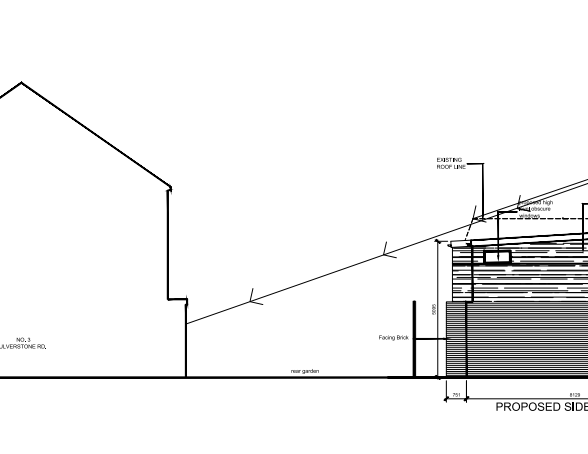
 The scheme was already sympathetically design by the architects in question when plans were forwarded to SWEL for assessment.

Calculations were carried out to assess impacts. The scheme showed at worst VSC and Sunlight at 84% of their former value and as such the reports recommendation as that the scheme was allowed to proceed.

Sunlight and Daylight Assessment Reports London

Flood Risk Assessment Hammersmith and Fulham (W6 9HB)

Flood Risk Assessment Hammersmith and Fulham (W6 9HB)

Acting on instruction received from an architect SWEL have prepared a flood risk assessment for a residential conversion. The scheme was well designed, and the site well placed (interms of level) so as to require the minimum of consideration with regards to resilient design.

High quality modelling data was used to provide a design finished floor level, that was at a very low risk of flooding, the report is being assessed at present with Hammersmith and Fulham Borough Council, and based on our track records SWEL are confident that the report will be well received.

Flood Risk Assessment Reports

Flood Risk Assessment Dartmouth

Flood Risk Assessment Dartmouth 

SWEL were approached by a private land owner in Dartmouth, who had an old garage that they wished to convert to residential use.

A scheme was developed that saw a building designed to be minimally affected in the event of flooding. Ground floor living accommodation was not included in the scheme, instead the living accommodation was included only on the 1st floor.

The 1st floor accommodation was proven to above likely flood depths via the use of detailed flood modelling data, which showed the site to flood to a round depth of 0.6 meters in a very bad flood.

Despite a thorough report concerns were raised over flood safety, the main objections coming from the Environment Agency, and as such they were in a mind to refuse the application.

Despite the flood maps showing a depth of 0.6 meters they do not specify a duration for the flood. However thinking pragmatically this is only likely to last 4 – 6 hours owing to influence of tides, it was this concept put forward by SWEL and presented to district council’s development committee, with a successful out come.

Such was the surprise at the persistent objections from the Environment Agency, that the application had some coverage by the local press.

Flood Risk Assessment Reports

Environmental Permit Application – Hereford

Environmental Permit Application – Hereford

SWEL were commissioned to undertake two permit applications for a Plastic Film Manufacturer based in Hereford.

One of the permits was for a trunking depot, so primarily categorised as a waste transfer operation, the other involved the treatment of wastes, and as such required a the inclusion of codes for treatment covered within the permit.

The Environment Agency are becoming increasingly concerned with the risk posed by fire and as such each of these application was requested to be accompanied by a fire prevention plan. This not only borrows from fire prevetion, but also mitigation of run-off impact during the extinguishing of a fire.

Both applications were accompanied by and Environmental Management System and a Site Condition Report.

Environmental Permit Application – Progress

At present SWEL are collating information required for the application including planning permission and completion of all requests set out by the Environment Agency during pre-application discussions.

Professional Planning Objection – Lichfield, Birmingham

Professional Planning Objection – Lichfield, Birmingham – Into

A residents group from the village of Little Hay, Lichfield approach SWEL with concerns raised regrading the construction of a very large chicken factory, which was proposed to be within 500 meters of various residential and commercial properties.

Professional Planning Objection – Lichfield, Birmingham – Odour

Supporting documents submitted with the application showed that odour in particular was at very low levels, and would not affect surrounding properties, however remodelling of odour emissions by SWEL showed a very different picture.  

Professional Planning Objection – Lichfield, Birmingham – Dust

The dust impact assessment submitted with the application did not consider PM2.5 particulates, There is a wealth of evidence on the effects of short-term exposure to PM10 on respiratory health, but for mortality, and especially as a consequence of long-term exposure, PM2.5 is a stronger risk factor than the coarse part of PM10 (particles in the 2.5–10 μm range). All cause daily mortality is estimated to increase by 0.2–0.6% per 10 μg/m3 of PM10. Long-term exposure to PM2.5is associated with an increase in the long-term risk of cardiopulmonary mortality by 6–13% per 10 μg/m3 of PM2.5 [1].

 So it was felt important that the inadeqaucy of the assessment was brought to the attention o the planning authority.

 Professional Planning Objection – Lichfield, Birmingham – Pathogens

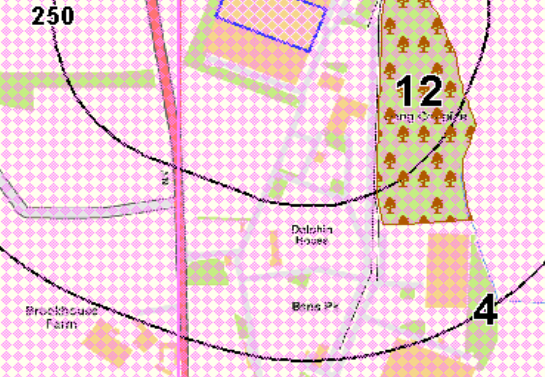
And so though out the application we saw the continued understatement of environmental impacts on a local level, and in some cases there were impacts that had not been considered at all.Such as risk from air bourne pathogens (figure 1).


[1] Pope CA III et al. Lung cancer, cardiopulmonary mortality, and long-term exposure to fine particulate air pollution. Journal of the American Medical Association, 2002, 287(9): 1132–1141.

Ship Recycling Project Management Cornwall UK

Ship Recycling Project Management – Intro

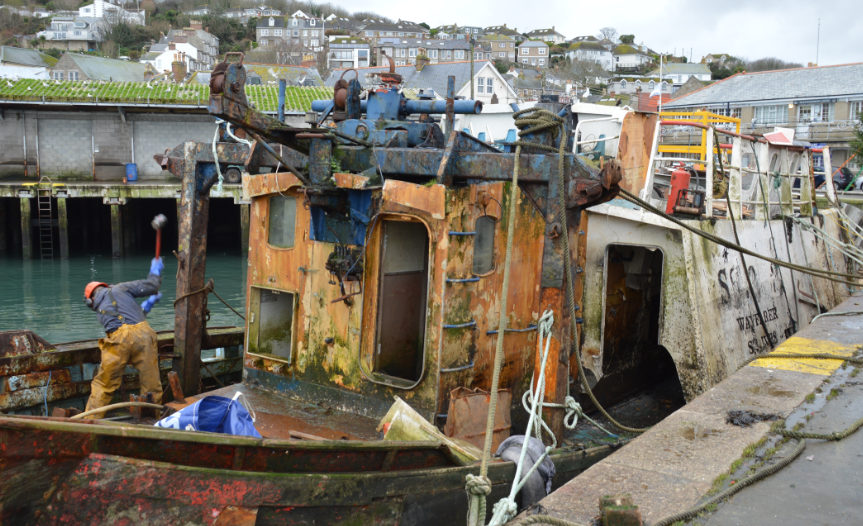
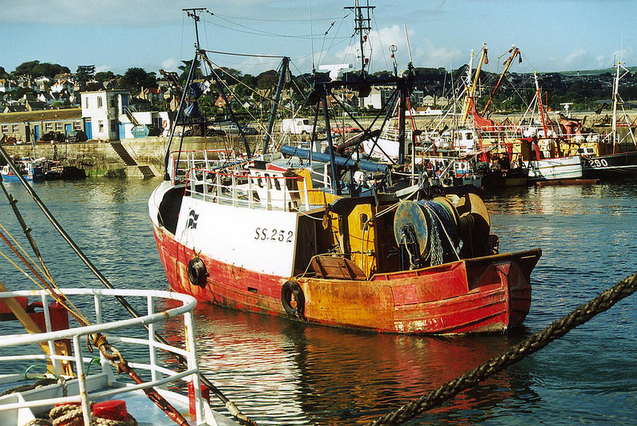
The Wayfarer was a motor fishing vessel which operated out of Newlyn Harbour that was built in 1959 approx. Sadly she has fell in to disrepair and Southwest Environmental Limited were commissioned as project managers for the environmentally compliant removal of the Wayfarer from Newlyn Harbour. This image courtesy of Simon Chapman, taken in 1999.

The actual removal of the vessel started after an incredible 18 months work of paper work most of which was generated as a requirement of an environmentally (legally) compliant removal. It is important to point out that although it would have been easier to break up the boat with an excavator, or sink her to create a reef, neither would have been legal.

Having previously managed the removal of the The Children’s Friend, we made a start on what was going to be a challenging project.

Ship Recycling Project Management – Process

The site team headed up by an experienced shipwright started work on the boat in situe, she was leaning heavily against the quay, and we needed to move the boat up to the landward end of the pier. In order to achieve this the the boat was lightened as far as practical with the winch gear being removed, and a good portion of the wheel house.
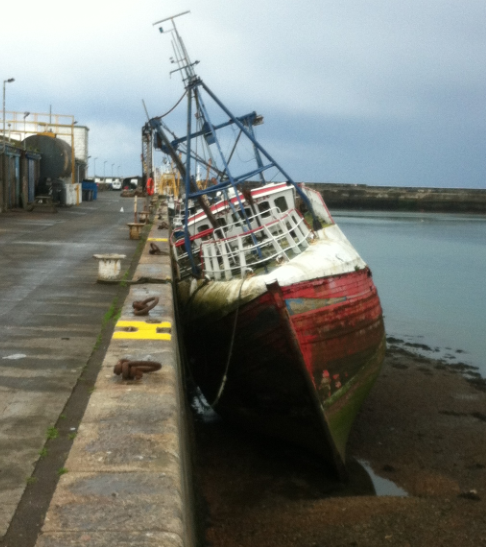
As we found her.
Removal of the heavier items.

After the heavier deck items had been removed we prepared to move up the boat to the land ward end of the quay. The boat was re-floated and pulled along to her final resting place. Having been neglected for close to a decade the boat had lots of leaks and the re floating took a number of tides before success was achieved.

Waste segregation took place on the qaut side, and as you would expect from a company call Southwest Environmental, the Environmental Compliance Side of of the project was given much attention. This included the generation of significant quantities of  paper work relating to duty of care.

Finally after weeks of preparation, stripping out internal structures, engines etc. the hull was ready to be cut in to sections.
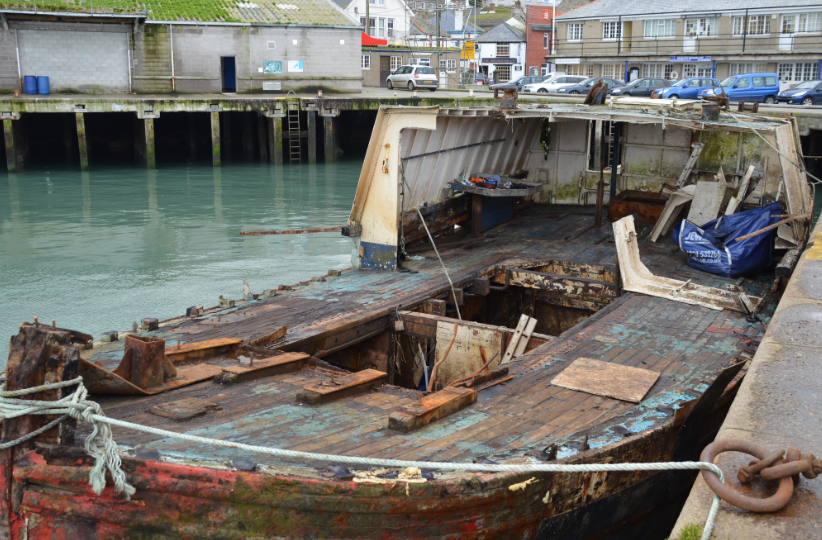
Nearly Ready to cut in to Sections
The stern is cut free.

Once 1 or 2 section had been cut from the hull, arrangements were made to lift the sections from the harbour. At this point we could only guess at how much the sections would weigh, as they are very odd shapes it is hard to tell, and we did have a bit of a surprise when we found that some weighed 20 tons.
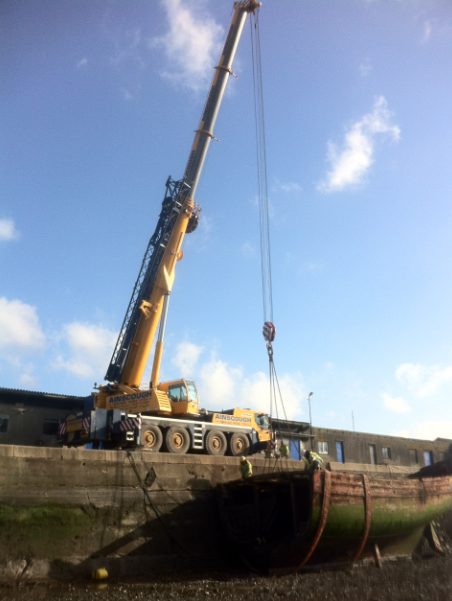
Crane ready to lift.

Ship sections on low loader.
Her final voyage!

This boat unlike the Children’s Friend  is not destined for landfill. The sections will be transported to Exeter Fabrications for compliant treatment and conversion in to ornamental structures. Give them a ring and buy a piece of maritime history.

Environmental Consultants

Traffic Impact Assessment – Essex

Traffic Impact Assessment – Grays, Essex

A waste recycling firm are applying for planning permission for a change of use. The change of use triggers the requrement for a traffic impact assessment.

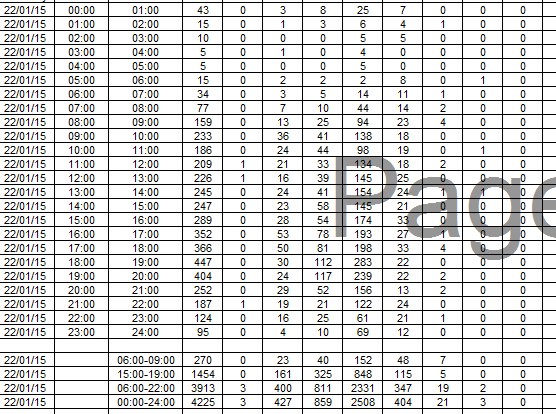
First off the baseline conditions must be considered which involves a through traffic count on the surrounding road network.

Traffic Impact – Lots of Data

This data is then used to calculate likely percentage increases from the development.

The Traffic Impact assessment includes commentary on the modal split of traffic in the area and the trip generation associated with the proposed development.

Traffic Impact Assessment – Most counts are now automated.

When considering the different modes of transport it is important to consider that  a small number of HGVs are likely to represent a higher percentage increase, as opposed to a small number of cars the affect of which is diluted within the often high numbers of trips that are generated by cars on most roads on a day to day basis.

Traffic Impact Assessment

Odour Impact Assessment & Odour Management Plan – Tiverton

Odour Impact Assessment  & Odour Management Plan – Tiverton

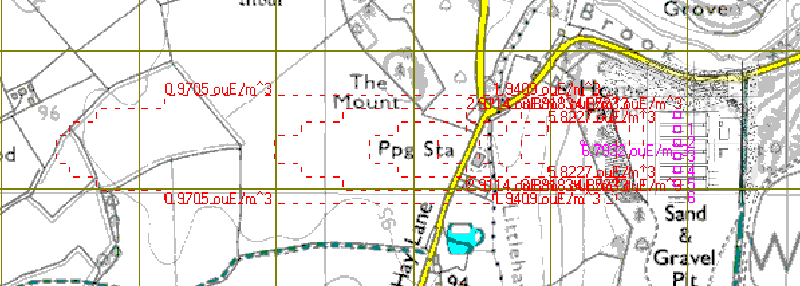
SWEL were engaged to provide supporting planning documents for a broiler breeder chicken shed near Tiverton, Devon. An odour impact assessment uses an atmospheric model to gauge the diffusion of an odour plume, plotting modelled odour concentrations on a grid, this grid is then used to create contours.

An odour impact assessment was required to assess odour impacts from the proposed shed which was to house 36,000 chickens. This may seem a large number but by today’s standards this s a relatively small shed, sheds of 300,000 chickens are not uncommon.

Typically it is necessary to statistically manipulate results and give a US 95 or US 99 value for odour concentration derived balancing of model out puts and wind direction etc. but in this instance it was not necessary, worst case scenarios were modelled and found to be within accepted limits.

An odour management plan was also produced,  this is an operational document and is to be used by the site operator during the operational phase of the broiler breeder sheds. Odour control in large scale chicken sheds involves controlling  diet, watering and ventilation rates amongst other things.

Odour Impact Assessment

Odour Management Plan

Flood Risk Assessment – Exmouth

Flood Risk Assessment – Exmouth

If you find out that your site is in Flood Zone 3a this does not mean that you will not be able to build on / develop the site. There will be more paper work, and you may have to wait some time for the Environment agency to decide whether your site is in fact suitable, but in 90% of cases Zone 3a will not pose as an insurmountable barrier.

Such was the case with a site in Exmouth, near Exeter, Devon where an infill building plot, was partially within flood zone 3a. It was quickly established that a variance in ground elevation was the cause of this  incursion, and that likely ground raising associated with the proposed develop would effectively place the proposed dwelling above flood water levels.

Flood Risk

Sunlight & Daylight Assessment – Hackney (N1)

Sunlight & Daylight Assessment – Hackney

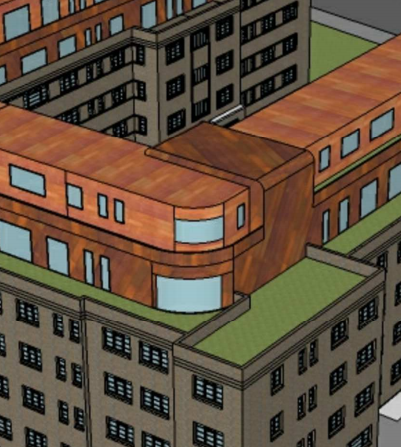
SWEl have just sucessfull completed a sunlight & daylight assessment for an unusual retrofit project in Cazenove (Hackney) London.

The project invloves the install of a further two stories on top of an existing building the design is modern and well considered to reduce daylighting impacts, with a tiered design with width decreasing upwards.

The surrounding buildings were subject to considerable overshadowing prior to the development, and as such only minimal reductions in enjoyed light were acceptable.

Sunlight & Daylight reduction post project were within limits set in the relavent guidance, and as such the project with minor alterations was recommended to proceed.

Sunlight and Daylight Assessment