Author Archives: will

KABA Implements Carbon Reduction Measures

Earlier in 2013 southwest environmental limited were engaged by KABA to assit in their accreditation to ISO14001.

The process of accreditation requires the assessment of current carbon emissions, to form a baseline by which to gauge reductions.

It was found that the key areas for carbon reduction were:

  1.  Transport
  2. Space Heating
  3. Compressed Air 

Basic calculations were used to highlight significant carbon sources.

KABA operates a very modern vehicle fleet, the vast majority of which have very low emissions. It was felt despite there being considerable carbon emissions associated with the use of vans and cars, there was little scope for saving here.

Space heating requirements are currently met by gas fired boilers, in an attempt to lower emissions these are to be swapped for ultra efficient  condensing boilers.

The replacement of the compressor with a more efficient model also aims to reduce carbon emissions. A compressor with a flexible out put is more likely to increase power supply factors, and a stop start system often is impractical without increasing power supply factor, creating extra expense. A way around this is to use a variable load compressor which rather than stopping and starting, slows down and speeds up dependant on demand, thus avoiding these knock on effects.

Environmental Management Systems

Site Contamination Asessment Bristol

Site Contamination Assessment Bristol – Introduction

Acting on instruction from a planning consultant, Southwest Environmental have undertaken a site contamination assessment in St. Philips, Bristol.

The site is currently in use as a builders yard and is ear marked for development.

Site Contamination Assessment Bristol – Work Undertaken

Six exploratory location were chosen and soil samples were taken from the top meter of soil, there was a great thickness of made ground on site, in places extending to the full depth of the exploratory holes.

Bristol has many buried river channels and it became apparent that a buried river channel or culvert runs along the site boundary.

breaking out positions

There was a considerable thickness of concrete on site, and made ground was hard going composed for the most part of brick, whether whole or in parts.

Geologically Bristol centre is normally river silts over marls.

Sample were sent for testing and results are awaited.

Site Contamination Assessment

Mould Risk Report – Tavistock

Mould Risk Report – Tavistock

A popular visitor attraction had concerns over mould that was present in one of their buildings.

It was apparent that condensation was causing moisture to form on the walls of the building, causing ideal conditions for mould.

Mould can cause problems when people with allergies or weakened immune system are exposed to it directly, its spores or metabolites such as the various types of toxins produced by mould species.

It was thought due to the transitory nature of visitors to the building that symptoms would have little time to develop as would be the case with residential mould problems.

SWEL recommended cleaning of the room with a domestic grade fungicide and increasing ventilation.

Again owing to small patches of mould, the subsequent cleaning and transitory nature of users it was deemed that their was low risk of harm.

If you would like SWEL to prepare a Mould Risk Report then please get in contact. (Number at top of page)

Visual Impact Report for Wind Turbine 100 KW – Cornwall

Visual Impact Report for Wind Turbine 100 KW – Cornwall

A land owner sought to errect a 100 KW turbine in Cornwall, part of requested information for planning application was a visual impact assessment.

As is standard with a SWEL visual impact assesment we create 3D models that acuratly depict the the proposed devlopment within the context of the environment.

Many planners ask for wire frame models for assessing visual impact (as below), and although wire frame models give a good representation of scale and massing thye do not factor in surface details, shading and colours.

For example in the bwlow picture the ground is many shades lighter than it would be in “real life”, and so we see an increase of contrst between the ground and turbine. With out surface texture added, hilly areas also appear darker than flat areas becauae of contour bunching. 


Sustainability Statement – Bristol

Sustainability Statement  – Bristol

SWEL were asked to undertake a sustainability statement for a planning application in Bristol, UK.

The school was expecting increased numbers of pupils and to meet demand a temporary classroom was considered the best solution.

A fairly large Solar PV array had been installed on the main school and so with the agreements of Bristol City Council Planning office, renewables obligation were deferred, from the proposed build on to existing renewable energy systems.

The report was prepared in line with current legislative guidance, and was delivered ahead of schedule and on budget.

Susutainability Statement Bristol

Desktop Study – London

Desktop Study – London

Acting on instruction from a devloper in London Southwest Environmenta under took a phase 1 preliminary risk assessment for site in Southwest London.

The site comprised of two terraced houses had been repourposed as a furniture shop, the plan was to demolish these and build a modern enregy effecient multi unit residential development.

Historic maps showed that their had been little change in the building outlin, and more historc trade entries for the site did not show any environmmentallu dmaging activites having taken place on site.

The walkover survey did not identify any likly sources of contamination and so the condition was discharged.

Desktop Study London

Basement

Environmental Consultants London

Degrdation of Feed in Tariffs for Non Wind Renewables

The February consultation on the Feed-In Tariffs (FITs) for non-solar renewable technologies, DECC has rather cleverly anounced it will be cutting feed in tariffs for non-solar renewables.

These cuts come in to force from April 2014, and see cuts of up to 20% in feed in tariffs, depdant on installed capcity in a given year.


Just as it seems we are making some head way with regards to energy independence, we get this sort of news! Do policy makers really understand how difficult it is to get a turbine through planning? If we the UK wants to move away from reliance on gas imports, then we need to see high levels of incentive such has been the case. Short sighted.

Sustainability Reporting for Care Home – Eastbourne

Sustainability Reporting for Care Home – Eastbourne

A dilapidated care home on the south cost was earmarked for redevelopment. SWEL were asked to undertake the following reports;

Desktop Study – To assess ground conditions, the condition was passed off at this first phase.

Desktop Study Eastbourne

Sustainability Statement – Eastbourne Council have a 15% emissions reduction target, this was met via the use of CHP. Although saving met through the building fabric effieicny saving may have been more cost effective the use of CHP ment that the building could be built to the contractors standard specification.

Site Waste Managemnt Plan – These are being phased out by October 2103, but SWEL were asked to prepare one for this project in 2012.

Project – Desktop Study Stoke-on-Trent

SWEL were approached by a private developer who was in the process of purchasing a disused industrial building.

It was unclear of the past use of the building and so a desktop study was recommended to try and pin down some of the past uses. The building had been labelled as “works” on historic maps and, there were various agency listings for trades at the premises.

It was recommended that caution should be exercised in purchasing the property as without a site investigation it was unclear as to whether the ground was contaminated.

Expert Planning Objection – Devon

Expert Planning Objection – Devon

SWEL were approached by a grioup of residents in Devon who were concerneed by plans to build a very large calve rearing unit on land adjacent to their houses. The development had been targetted to be just below thresholds for EIA. Even so it was thought that residents would experince negative impacts in the form of noise, light, odour and nusnce (flies).

Artists Impression of Development

SWEL produced a report which outlined amongst other things the levels of noise aticipated, stating respect academic materials SWEL built a case that suggested that noise levels would be in breach of WHO recommnedations, particulalry in litght of the fact that background noise levels in the area were so low.

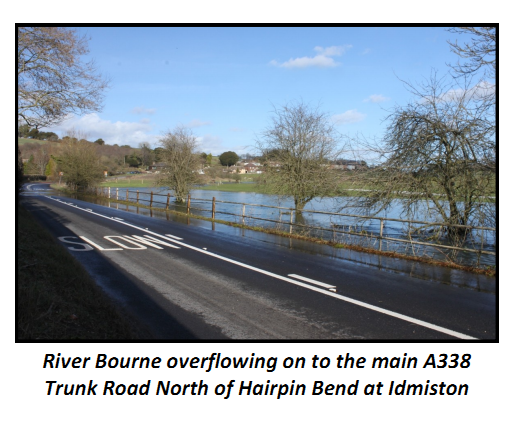
Comment was also made on flood risk, which proved pivotal in the planning application being refused.

Environmental Consultants Devon