
Environmental Noise Monitoring for Commercial Plant Operations in London
Project Overview and Location
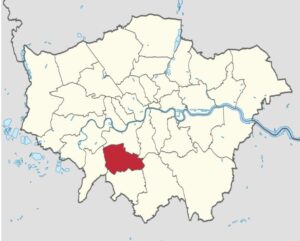
Southwest Environmental Limited was recently commissioned to undertake an environmental noise monitoring project at a residential boundary in London, Greater London. The location falls under the planning jurisdiction of the London Borough of Merton. The primary objective of this instruction was to record and quantify noise levels associated with large-scale plant equipment situated at a major tennis club in the area. Specifically, the noise sources under investigation included a chiller plant, a centralized building, and broadcast facilities. The monitoring was initiated following reports that operational noise persisted continuously throughout the daytime and nighttime periods.
Acoustic Monitoring Methodology
To acquire accurate and representative acoustic data, Southwest Environmental Limited deployed a Svantek SV 307A monitoring station. The sound level meter was installed securely at the residential receptor site and was programmed to log data continuously over a designated five-day period. The scope of the monitoring recorded hourly intervals to establish a precise timeline of the ambient and operational noise climate.
The acoustic parameters measured were A-weighted to adjust the measurements to match human perceived noise levels. The primary metrics utilized in this assessment were:
- LAeq: The A-weighted, equivalent continuous sound level, which calculates the average noise energy over a specific time period.
- LA(90): The A-weighted sound level that is exceeded for 90% of the measurement duration. This parameter is the standard metric used to establish the underlying background sound level at a receptor.
Regulatory Standards and Assessment Criteria
The collection of LAeq and LA(90) data is fundamentally required for the assessment of commercial and industrial noise sources. The methodology applied during data acquisition aligns with the requirements of BS 4142: Method for Rating and Assessing Industrial and Commercial Sound. This standard dictates how background sound should be measured and compared against the specific sound level of the commercial operation to determine the likelihood of adverse impacts.
Our data processing categorized the continuous logging into specific reference periods, calculating the average sound levels for the daytime (08:00 – 17:00), evening (18:00 – 23:00), and nighttime (00:00 – 07:00) hours. This temporal breakdown is essential for conducting a robust BS 4142 assessment, as the sensitivity of residential receptors varies significantly between day and night. For more information on how we conduct these surveys, please visit the environmental services section on the Southwest Environmental Limited website.
Project Delivery
Environmental sound assessments often require prompt action to capture representative data during specific operational periods. For this project, Southwest Environmental Limited executed a rapid turnaround. We prioritized a short lead time for site mobilization, equipment installation, and the subsequent compilation of the acoustic data into a structured summary report.
Please contact us if you would like a fixed price quotation.