
Biodiversity Net Gain Assessment for Equestrian Development in Charfield, Gloucestershire
Southwest Environmental Limited was commissioned by an individual to produce a Biodiversity Net Gain (BNG) Report for a proposed equestrian development in Charfield, Gloucestershire . The site is located within the planning jurisdiction of Stroud District Council. The proposed development involves the construction of a new timber horse stable block and a concrete base for horse turnout. This assessment was completed with a short lead time to support the timely submission of the planning application.
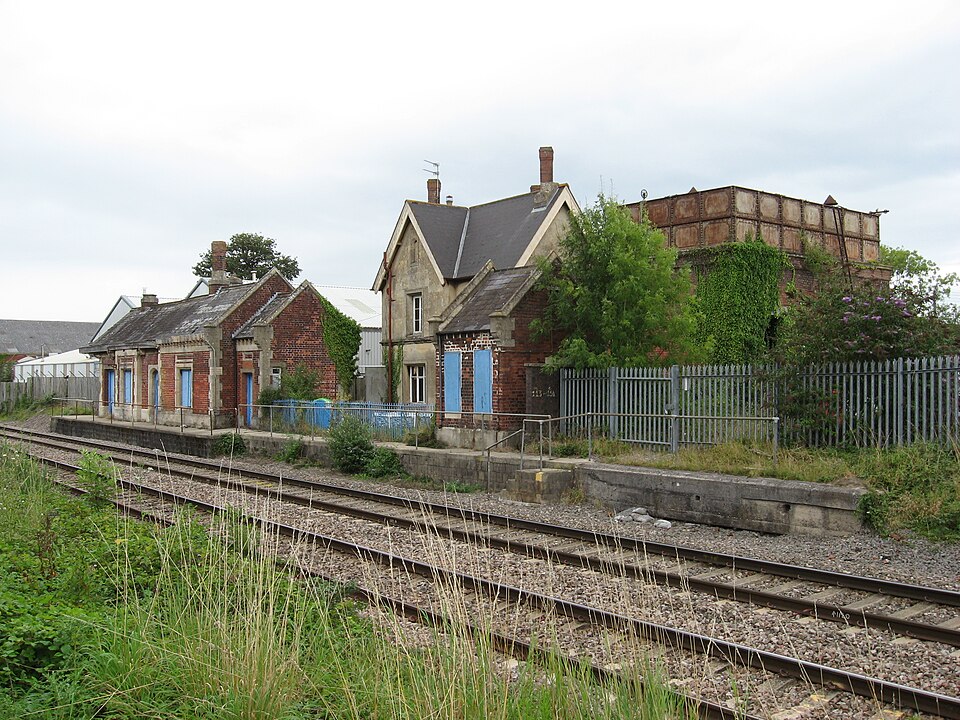
Disused station buildings and water tank at the former Charfield railway station, South Gloucestershire.
Retrospective Baseline Assessment
The site previously operated as an established equestrian area featuring a wood chip horse paddock, an access track, and modified grassland. Following unpermitted site alterations—specifically the installation of a gravel access track across the grassland between May 2025 and March 2026—a retrospective analysis was required. In accordance with Schedule 7A of the Town and Country Planning Act 1990, the baseline was set to April 2025, immediately prior to the habitat degradation.
The site also resides in proximity to designated ecological areas, including the Cullimores Quarry SSSI, Damery Road Section SSSI, and the Cotswolds AONB. Utilizing the Statutory Biodiversity Metric 4.0, the pre-development baseline was calculated at 1.98 Habitat units and 1.20 Hedgerow units. The existing modified grassland was assessed as being in “Poor” condition due to heavy grazing and the presence of competitive species such as creeping thistle, ragwort, and bitter dock[ .
Proposed Biodiversity Enhancements
To achieve the net gain mandated by the Environment Act 2021, a targeted habitats plan was developed. The primary mitigation strategy involves enhancing 700 square meters of the existing modified grassland from “Poor” to “Moderate” condition, transitioning it to other neutral grassland. This requires reducing nutrient status through a strict cutting management regime and the introduction of native neutral grassland species .
Furthermore, 70 meters of native hedgerow—currently containing species such as blackthorn, common hawthorn, field maple, and ash—will be enhanced from “Moderate” to “Good” condition. This will be achieved through a 2- to 3-year cyclical rotational cutting regime and targeted gap planting. The plan also specifies the planting of four small native trees[cite: 5]. Additional ecological provisions include the installation of bat and bird boxes, the creation of deadwood habitat piles for invertebrates, and the integration of hedgehog access points
Calculated Net Gain Outcomes
The implementation of the proposed enhancement measures will generate 2.20 Habitat units and 1.33 Hedgerow units. This equates to an 11.31% net gain in Habitat units and a 10.86% net gain in Hedgerow units, successfully fulfilling the statutory requirements and satisfying all trading rules A comprehensive 30-year Management and Monitoring Plan will secure the long-term persistence of these habitats
For more details on our statutory metric calculation capabilities and ecological reporting, please visit our Biodiversity Net Gain services page.
Please contact us if you would like a fixed price quotation.